Why Societies Produce the Very Dysfunction They Fear

Much of what we call social dysfunction is not random human failure, but blocked contribution, misaligned systems, and environments that fail to organise human capability into meaningful participation.
The Energy Pattern Beneath Social Breakdown
There is a pattern sitting beneath much of modern social instability that is rarely discussed directly because it challenges the way societies prefer to frame dysfunction. When people feel fundamentally excluded, rejected, devalued, or treated as incompatible with the surrounding environment, something predictable begins occurring internally. Trust weakens, investment in the collective declines, and identification with the wider community begins breaking down.
People who feel welcomed into a society generally want to protect it, strengthen it, and contribute to it. People who feel humiliated, discarded, or structurally unwanted often begin moving in the opposite direction — not always through overt destruction, but through resentment, withdrawal, disengagement, anti-social identity formation, nihilism, or loss of care toward the surrounding social structure. This is not simply ideology. It is behavioural gravity.
Many societies assume cohesion can be maintained while large portions of the population feel economically irrelevant, culturally unwanted, psychologically alienated, or structurally invisible. It cannot. Communities are not held together by force alone. They are held together through meaningful participation, reciprocal recognition, and environments where people feel their existence has value within the larger system. When those conditions disappear, fragmentation begins accelerating beneath the surface long before it becomes visible in public statistics.
Much Dysfunction Is Untapped Contribution
A great deal of what modern systems classify as dysfunction is often untapped contribution with nowhere to go. Many individuals possess creativity, emotional depth, intelligence, adaptability, practical ability, or unconventional strengths that existing structures either fail to recognise or actively suppress. The issue is not always absence of value. Often, it is absence of pathways.
When people are able to help someone, solve something, build something, or contribute in ways that are genuinely valued, income can emerge alongside dignity, belonging, identity stability, and purpose. As meaningful participation increases, destructive energy often begins decreasing naturally because people feel connected to something larger than themselves.
Purpose is not a luxury layered on top of survival after material needs are met. It is part of what makes survival coherent in the first place. Without meaningful participation, people frequently begin drifting psychologically even when their basic needs are technically maintained. Human beings are not machines requiring only maintenance inputs. They require orientation, recognition, contribution, and relational significance.
When societies fail to create enough legitimate pathways for contribution, dormant capability accumulates pressure beneath the surface. Eventually, that pressure expresses itself somehow.
Systems Often Recognise Only Narrow Forms of Value
Most large systems are designed around standardisation because standardisation simplifies administration. The problem is that human beings are not standardised.
Modern institutional environments often reward only very specific behavioural profiles, communication styles, educational pathways, cognitive patterns, or economic functions. Those who operate outside these narrow templates frequently become treated as problematic rather than simply different. The result is a civilisation that wastes enormous amounts of human potential.
Many individuals who could become builders, innovators, carers, mentors, organisers, creators, specialists, or protectors instead become categorised as burdens because the surrounding infrastructure lacks sufficient flexibility to integrate them properly. This creates a dangerous feedback loop. The more people feel their value is unseen, the harder it becomes to sustain motivation toward collective participation. As participation weakens, instability grows. As instability grows, systems become increasingly defensive and exclusionary. Eventually, the system begins producing many of the very behaviours it claims to oppose.
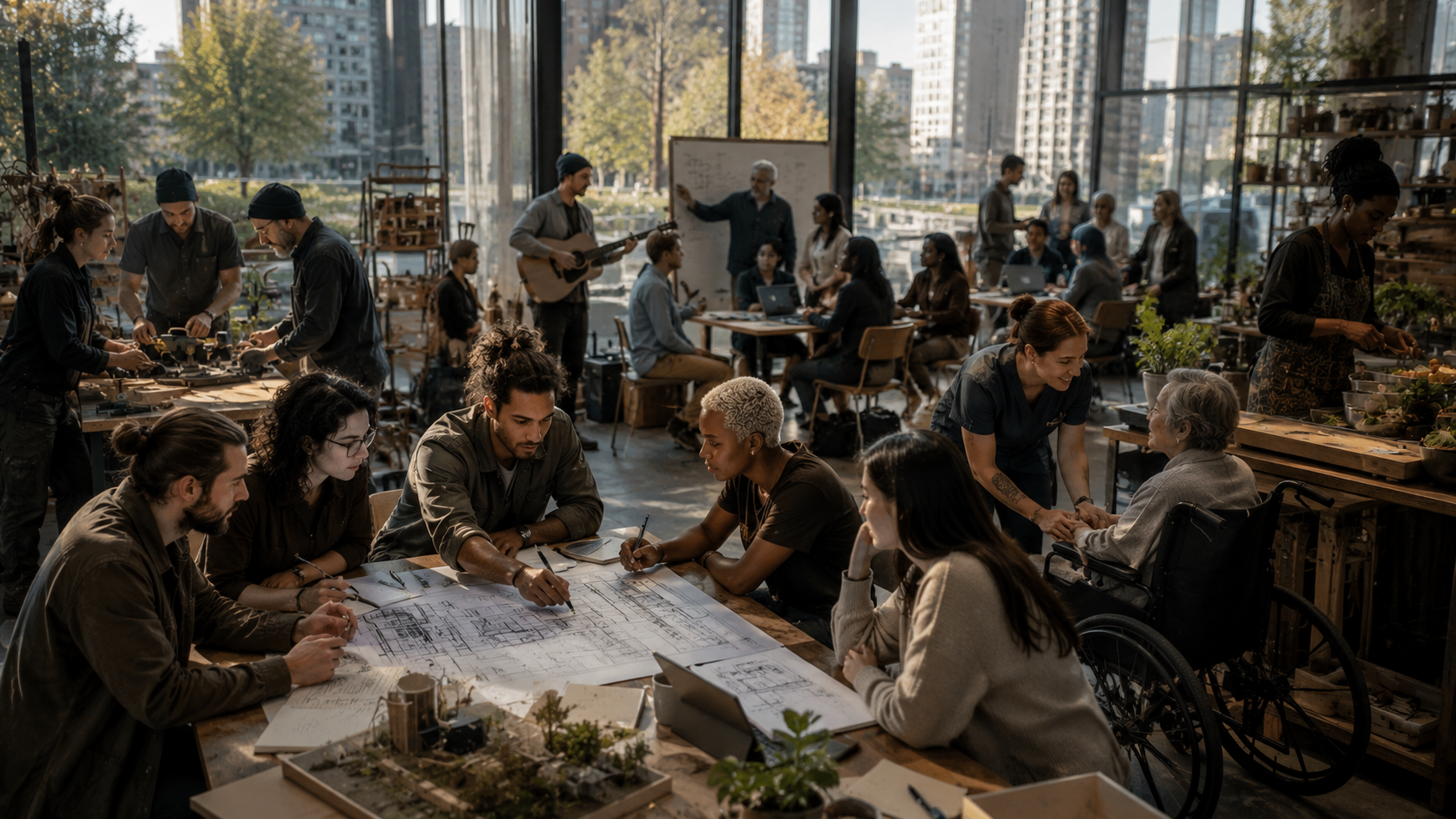
Exclusion Creates Secondary Forms of Destruction
Societies often speak about crime, addiction, extremism, alienation, anti-social behaviour, or disengagement as though these emerge independently from the environments surrounding them. But human behaviour is deeply environmental.
This does not remove personal responsibility. It simply expands the field of analysis beyond simplistic moral judgement. When populations repeatedly experience humiliation, invisibility, economic irrelevance, chronic instability, social fragmentation, or collapse of future orientation, destructive outcomes become increasingly predictable.
The issue is not that every excluded person becomes destructive. The issue is that exclusion systematically increases the probability of destructive adaptation patterns emerging over time. Human beings adapt to environments. If an environment rewards contribution, contribution increases. If it rewards outrage, outrage increases. If it generates hopelessness, hopelessness begins reproducing itself culturally.
Many systems attempt to solve breakdown downstream after dysfunction has already hardened into identity, behaviour, dependency, or conflict. Far fewer focus on redesigning the upstream conditions repeatedly generating those outcomes in the first place.
The Problem Is Often the Conditions, Not Merely the Individuals
Modern culture frequently searches for individuals to blame because individual blame is emotionally satisfying and politically convenient. But recurring patterns point toward something larger.
When the same forms of dysfunction continue appearing across generations, demographics, institutions, and regions, it becomes increasingly difficult to argue that the issue exists purely at the level of isolated personal failure. When a system consistently generates the same outcomes, the system itself becomes the point of intervention.
A civilisation can unintentionally manufacture fragmentation when it disconnects people from meaningful contribution, denies pathways into recognised value, collapses future orientation, weakens social belonging, rewards short-term survival over long-term development, and separates dignity from participation. Under those conditions, dysfunction is not random. It becomes structurally reproducible.
And if systems can produce those outcomes, systems can also be redesigned to reduce them. That makes the problem resolvable.
Beyond the False Choice Between Conformity and Exclusion
Many people eventually encounter the same implicit message from modern structures: conform completely, or fall behind. But this binary creates its own instability because not all individuals are capable of functioning inside rigid standardised pathways without losing essential parts of themselves in the process.
Some adapt externally while collapsing internally. Others disengage entirely. Others become oppositional. Others drift into fragmentation and instability. Yet there is another possibility beyond blind conformity or total rejection: integration.
The future likely depends less on destroying existing systems and more on redesigning how they absorb complexity, difference, and unconventional contribution. A healthy civilisation should not require every person to become identical in order to participate meaningfully within it. It should possess enough structural intelligence to organise difference into usefulness.
This is where societal maturity begins separating itself from societal fragility. Fragile systems fear complexity. Mature systems integrate it.

Why Principle Matters More Than Ideology
One of the reasons modern societies struggle to coordinate effectively is because nearly every domain has become trapped inside competing ideological ecosystems. Different groups hold different politics, beliefs, moral frameworks, priorities, narratives, and interpretations of reality. As complexity increases, trust weakens because no shared stabilising structure remains underneath the conflict.
This is where principle becomes critically important. Principle differs from ideology because it is not dependent on tribal identity, institutional branding, political fashion, or emotional reaction cycles. Principle remains stable even when opinions change.
Patience, understanding, responsibility, kindness, integrity, acceptance, faith, and love are not merely emotional preferences. They are stabilising mechanisms that increase the probability of sustainable cooperation across time. Without principles anchoring systems, societies begin drifting into permanent reaction cycles where everything becomes negotiable except power itself.
Principle creates continuity. Continuity creates trust. Trust allows long-term coordination. And long-term coordination is what functioning civilisation ultimately depends on. Where leadership fails, principle often becomes the remaining path forward.
Civilisation Depends on the Movement of Contribution
Every functioning society is fundamentally an ecosystem of exchanged contribution. People solve one another’s problems, create value for one another, and continuously transfer labour, care, insight, protection, organisation, invention, and creativity between each other.
When contribution moves effectively, societies strengthen. When contribution becomes blocked, entire populations begin stagnating psychologically, culturally, and economically. This is why future-oriented systems thinking cannot focus solely on resource distribution after collapse occurs. It must also focus on designing better infrastructure before collapse occurs.
This includes infrastructure not merely of roads, buildings, and technology, but of participation itself. The future may depend heavily on whether societies can build broader pathways that recognise unconventional capability, integrate overlooked people, reconnect dignity with contribution, and transform dormant human potential into civic, cultural, and economic strength.
Many individuals currently treated as liabilities are not absent of value. Their value simply has nowhere coherent to move.
Toward a More Integrated Civilisation
The challenge facing modern civilisation is not merely economic, political, or psychological. It is architectural. Human systems have become increasingly powerful technologically while often remaining underdeveloped in their ability to organise human complexity constructively.
A civilisation that cannot integrate large portions of its population into meaningful contribution eventually generates fragmentation faster than it generates cohesion. That fragmentation expresses itself through institutional distrust, rising hostility, civic disengagement, cultural exhaustion, escalating dependency, and declining collective resilience.
The answer may not lie purely in increasing punishment after breakdown or expanding relief after collapse. It may lie in designing environments where more people can contribute before breakdown occurs at all. That requires systems capable of recognising broader forms of value, integrating greater forms of difference, and organising participation more intelligently across society.
Because when people feel useful, connected, valued, and capable of contributing meaningfully to the lives around them, the behavioural orientation of civilisation itself begins changing.
And when contribution can move, value can move. When value can move, alignment becomes possible. When alignment becomes possible, many of the patterns societies currently fear most begin losing the conditions that produce them.
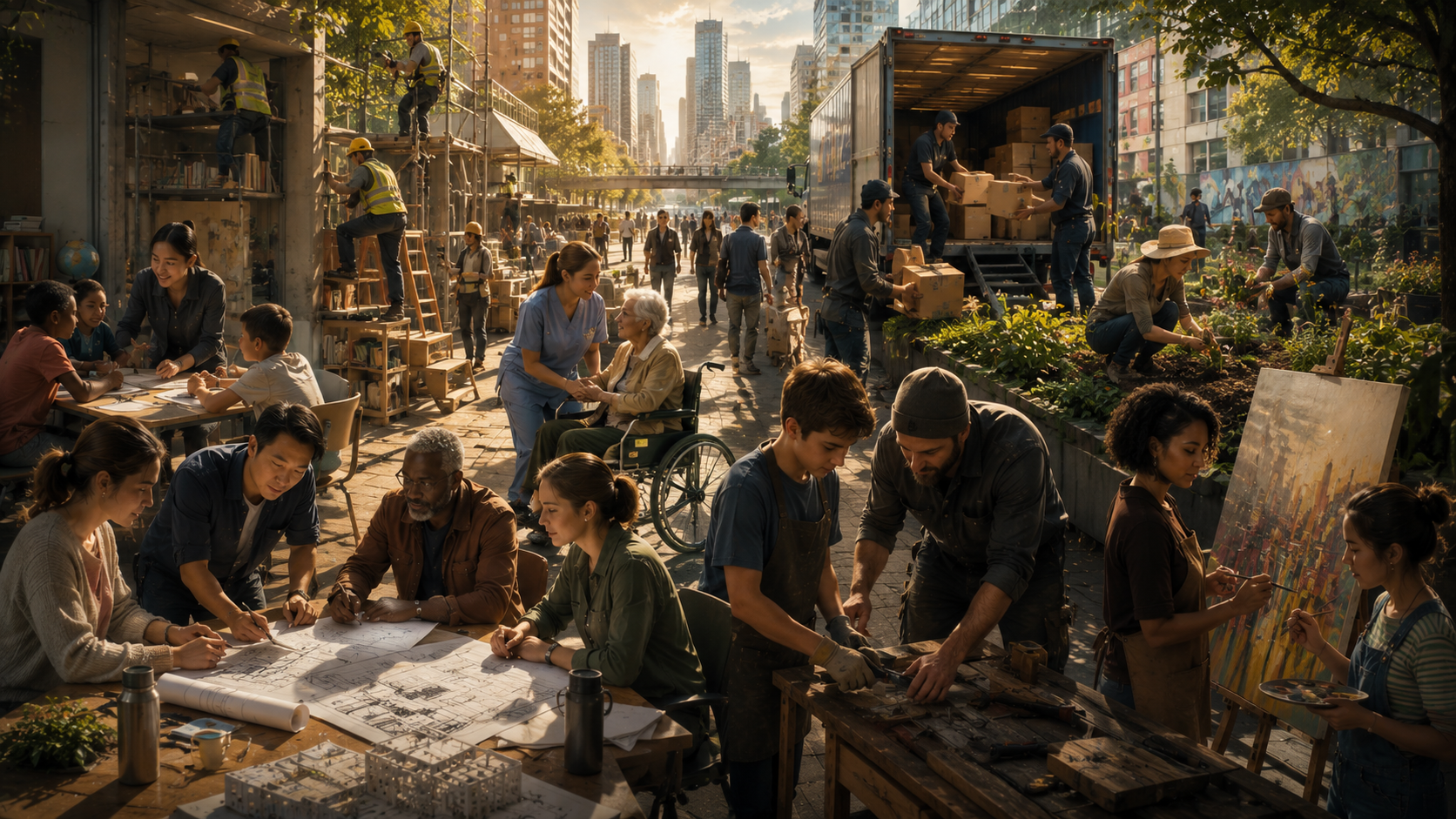
Contribution Infrastructure as a Civilisational Requirement
This broader pattern forms part of the foundational logic underpinning the GSM™ ecosystem and the development of the Windland™ prototype environment. Much of the infrastructure now being assembled across GSM is built around a central premise: societies become more stable, productive, and aligned when more people are able to participate meaningfully within them.
That is why the wider framework places strong emphasis on participation pathways, contribution infrastructure, unconventional value integration, cultural activation, human development systems, civic coordination, and environments capable of converting overlooked capability into constructive social and economic movement.
Rather than viewing large portions of the population primarily through the lens of risk, dysfunction, dependency, or management burden, the model focuses on expanding the number of ways people can become useful to one another and connected to something larger than themselves.
In that sense, the work is not structured around exclusion, ideological conformity, or social compression, but around increasing civilisation’s capacity to organise human complexity into contribution, coherence, and long-term societal resilience.