Open Doors, Shift Culture

How small acts of structured participation generate large-scale cultural momentum.
The Mechanics of Cultural Motion
Cultural change is often framed as the outcome of large institutional reforms or technological disruption. While these forces play a role, much of societal movement originates in smaller, distributed actions. The simple act of enabling another person’s progress — through access, connection, or encouragement — can initiate broader patterns of systemic activation.
When individuals contribute to forward motion beyond their immediate self-interest, they participate in shaping behavioural norms. Over time, these repeated micro-acts accumulate, forming an informal infrastructure that supports cultural evolution.
In this sense, opening doors becomes a mechanism of civic motion rather than a symbolic gesture.
Participation as Structural Influence
Societies are not static entities. They are dynamic systems shaped by participation patterns. The degree to which individuals actively support one another influences whether cultures stagnate or regenerate.
Frameworks that reward contribution over isolation tend to produce higher levels of collective resilience. When participation is structured as mutual activation rather than competitive survival, trust becomes operational rather than aspirational.
This shift alters how individuals perceive opportunity. Instead of navigating systems alone, they engage within networks designed to circulate progress.
Cultural movement becomes distributed rather than centralised.
Designing Environments That Circulate Opportunity
For participation-driven cultures to function, systems must be intentionally designed to support reciprocal activation. Informal goodwill alone cannot sustain large-scale transformation.
Effective frameworks embed pathways that make it easier to connect others with resources, knowledge, and momentum. These pathways can exist across professional networks, educational ecosystems, community spaces, and digital platforms.
When access mechanisms are visible and repeatable, individuals begin to internalise activation as a default behaviour. This gradually recalibrates cultural expectations around responsibility and engagement.
Opportunity circulation becomes normalised rather than exceptional.
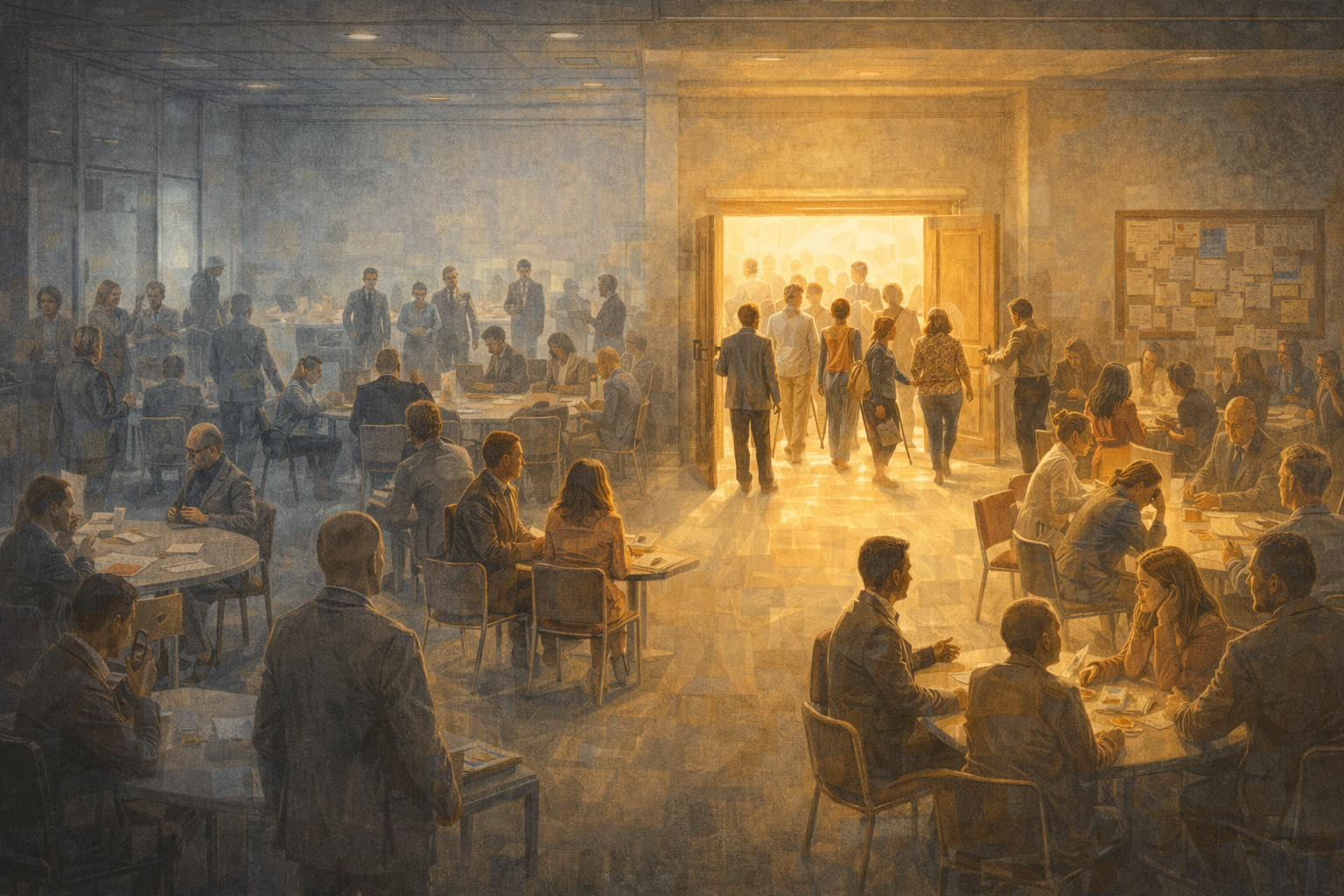
The Difficulty of Opening Doors While Building Them
In transitional periods, individuals and organisations often find themselves constructing new pathways while simultaneously attempting to support others. This dual role introduces tension.
Designing future-oriented systems requires confronting current limitations without bypassing them. Frameworks built without grounding in real conditions frequently fail because they ignore the friction inherent in lived environments.
Sustainable transformation emerges when systems are developed from within reality rather than imposed upon it. This approach ensures that activation mechanisms remain responsive to actual constraints rather than idealised assumptions.
Practical integration replaces abstract aspiration.
Why Belief Systems Shape Cultural Reception
One of the central challenges in cultural change is the limited impact of factual information alone. Individuals interpret new knowledge through pre-existing belief structures shaped by identity, experience, and social conditioning.
As a result, attempts to influence behaviour through data without addressing underlying frameworks often produce resistance rather than adaptation.
Engagement strategies that recognise belief as a structural component of cultural evolution tend to achieve more durable outcomes. By aligning communication with lived perception, systems can facilitate gradual shifts in worldview without triggering defensive reactions.
Transformation becomes metabolised rather than imposed.
Empathy as a Design Principle
Frameworks that aim to influence cultural direction must account for emotional and psychological realities. Empathy functions not merely as a moral virtue but as a design parameter.
Systems that incorporate empathic engagement create environments where individuals feel capable of participating in change processes. This reduces friction associated with perceived judgement or exclusion.
When empathy informs structural design, participation expands organically. Individuals are more willing to contribute to systems that recognise their context rather than dismiss it.
Cultural evolution becomes collaborative rather than adversarial.
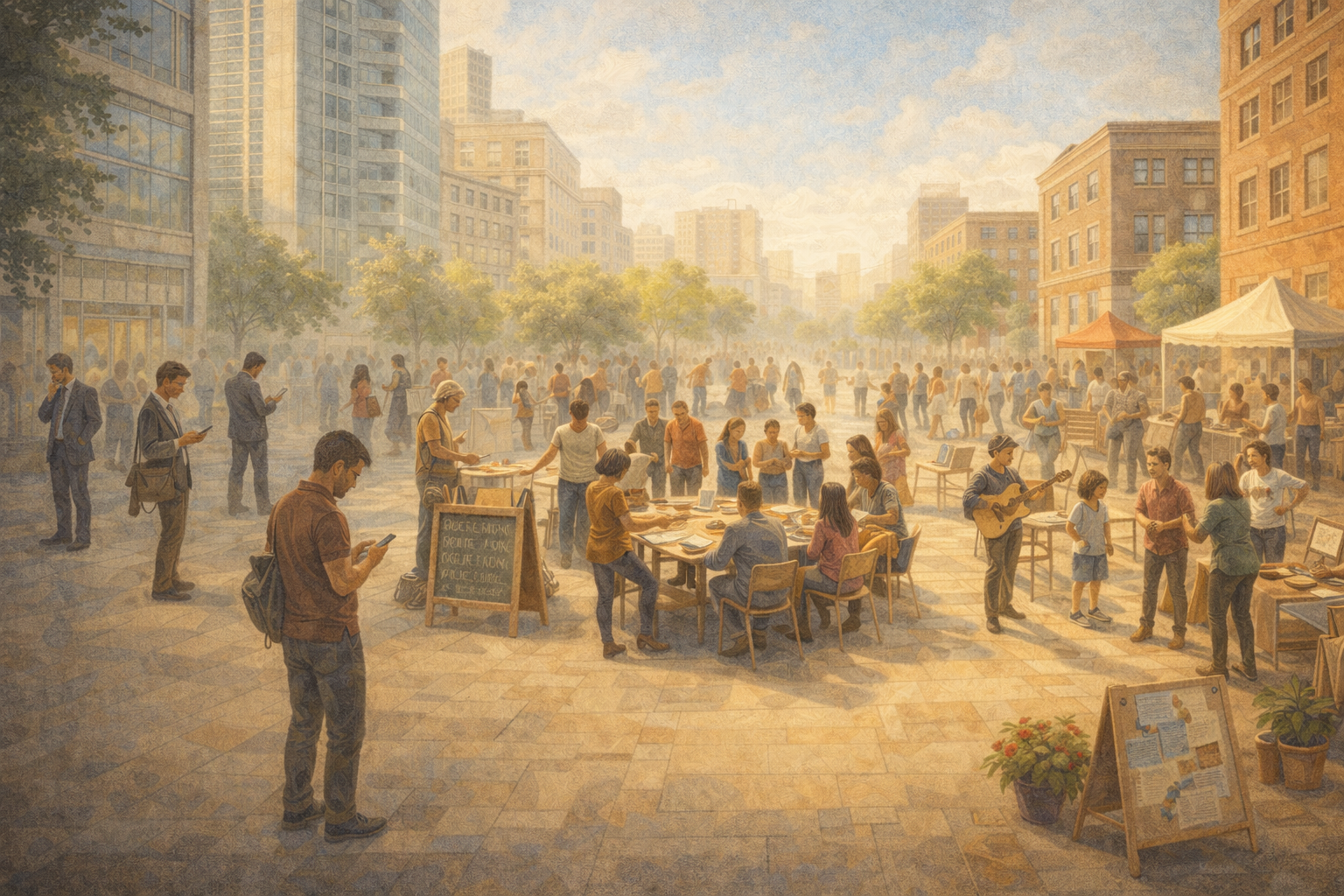
Micro-Activation and Self-Regeneration
Opening pathways for others does not only influence external outcomes. It also alters internal psychological states. Individuals who facilitate motion within their networks often experience increased agency and reduced stagnation.
This reciprocal dynamic creates a regenerative loop. By contributing to collective progress, participants reinforce their own capacity for adaptation.
Systems that enable such loops generate sustained engagement because they integrate personal development with societal contribution.
Motion becomes self-reinforcing.
From Isolated Effort to Cultural Momentum
When participation mechanisms are embedded across multiple domains, individual actions begin to synchronise into broader cultural patterns. The cumulative effect of distributed activation can reshape societal expectations regarding cooperation, leadership, and responsibility.
Rather than relying solely on central authority, cultures evolve through decentralised participation structures. Each small act contributes to the overall trajectory of movement.
Over time, this generates momentum that is both scalable and resilient.
Cultural change becomes a function of design rather than chance.
Engineering Evolution Through Participation
The long-term stability of complex societies depends on their ability to convert intention into operational frameworks. Encouraging individuals to open doors for one another is not merely an ethical proposition. It is a strategic orientation toward adaptive resilience.
By designing systems that reward activation, societies cultivate environments where evolution becomes instinctive. Participation shifts from obligation to opportunity.
Through this process, cultural transformation moves from aspiration to implementation.