The People the System Finds Inconvenient
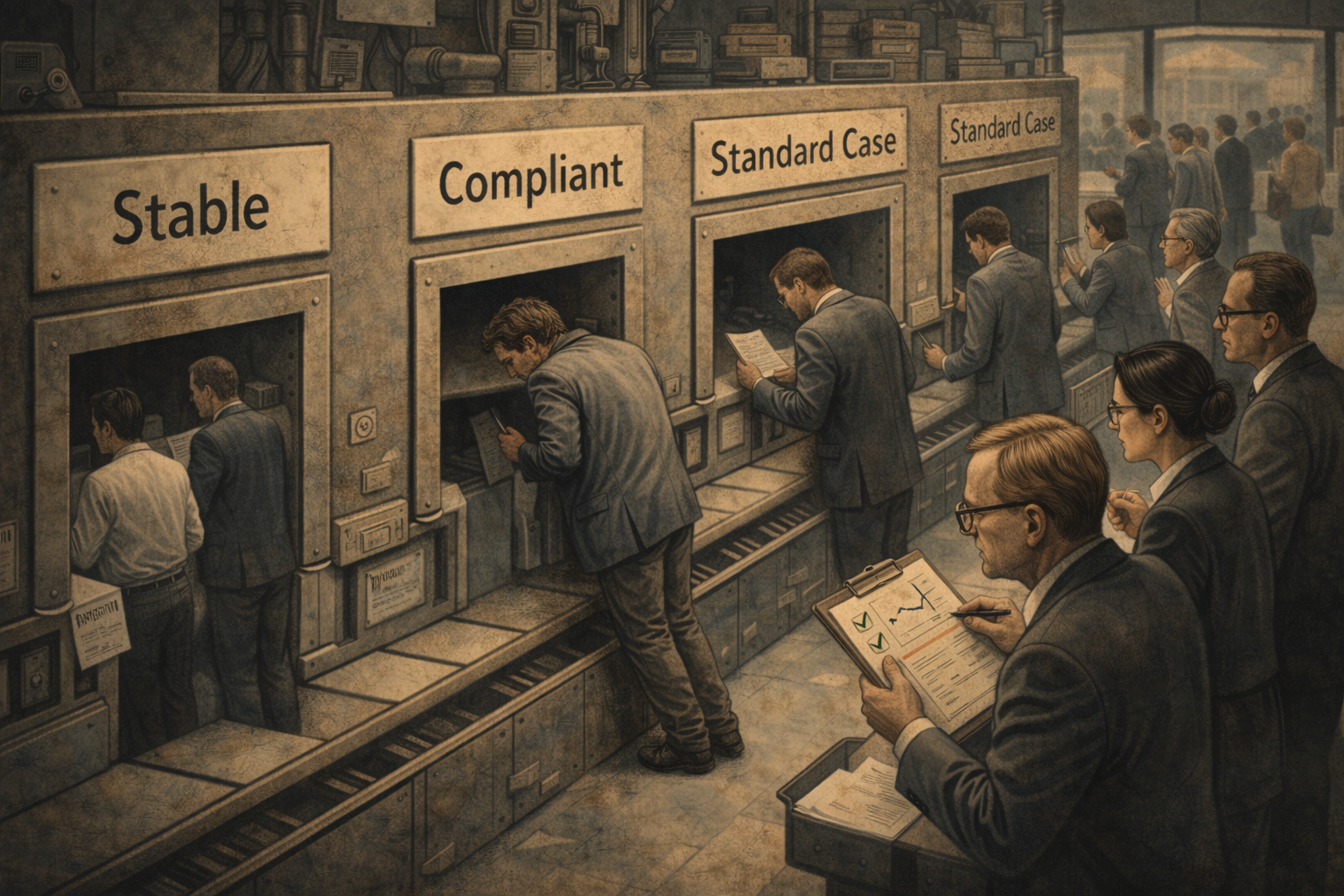
Why humanity’s future may depend on the people who never fit the template.
Designed for Convenience, Not Accuracy
Look closely at modern public health systems, social services, education models, and support frameworks and a pattern emerges.
They work best for the people who fit the template.
The predictable ones.
The organised ones.
The ones whose lives follow relatively linear paths and whose behaviour maps neatly onto existing categories.
These people receive appointments.
They receive plans.
They receive solutions.
Not because they are more deserving — but because they are easier to process.
Public systems optimise for convenience rather than complexity. They are built to move large numbers of predictable people through structured pathways, not to accommodate the full diversity of human experience.
So when someone doesn’t fit the mould, they are often treated less as a person with legitimate needs and more as a disruption to the workflow.
The system isn’t necessarily broken.
It’s simply designed for the wrong kind of human.
When Humans Don’t Fit the Boxes
The moment someone’s life cannot be neatly mapped onto a screening form or risk category, the system begins to struggle.
They become labelled:
“Too complex.”
“Non-compliant.”
“High risk.”
“Unstable.”
Or the quiet institutional dismissal:
“Hard to help.”
But these labels rarely describe the person.
They describe the limits of the model.
These individuals are not inherently difficult — the framework simply lacks the capacity to hold them.
Instead of expanding the system to reflect real human complexity, many institutions narrow the definition of “acceptable” until only a portion of the population fits comfortably inside it.
Everyone else is redirected, deferred, waitlisted, or quietly moved aside.
This isn’t always a resource problem.
It’s an architectural one.
Our systems were built for simplicity, while human lives rarely are.
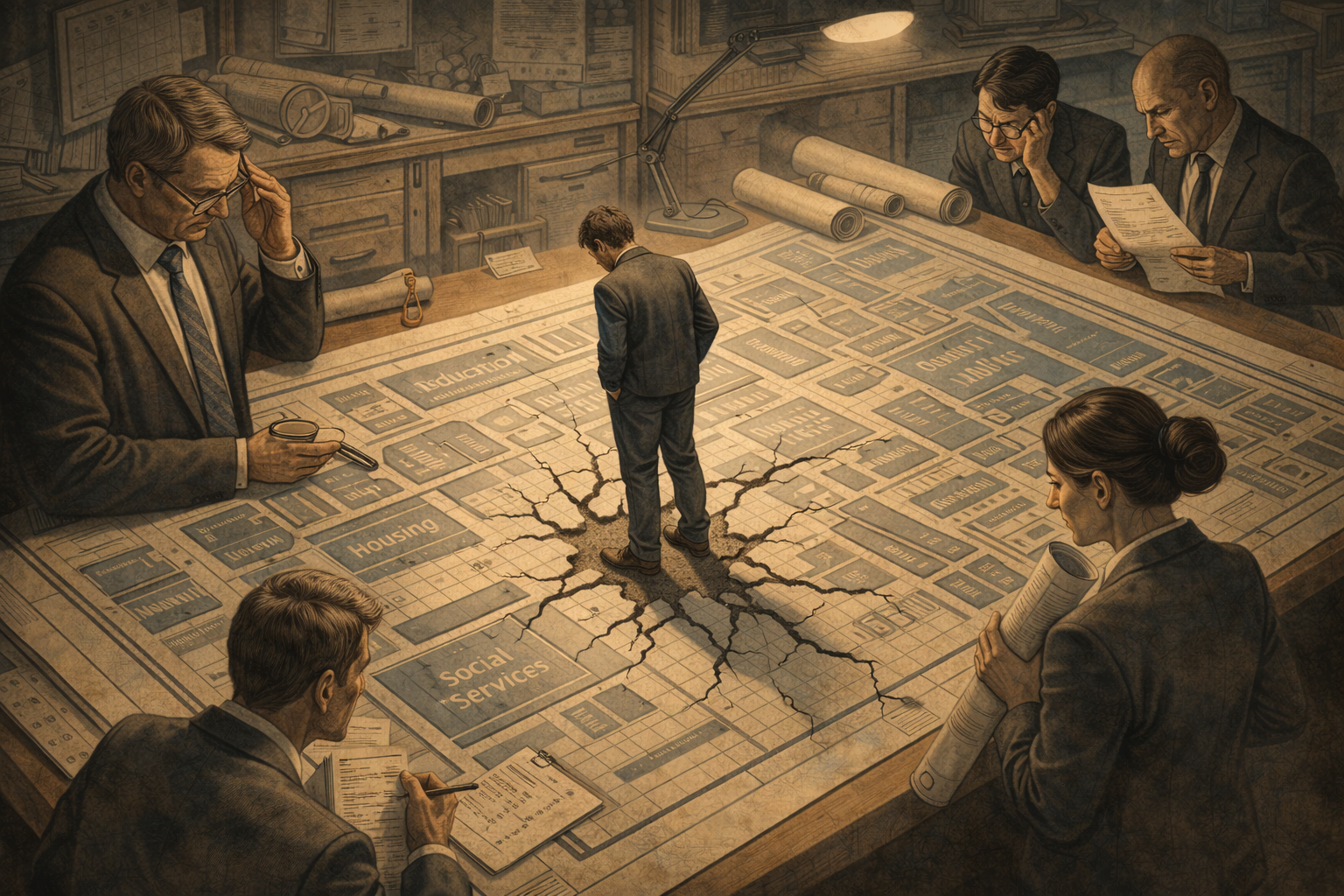
The Blueprint Hidden in the Misfits
There is a deeper irony that often goes unnoticed.
The people who overwhelm existing systems are frequently the ones revealing where those systems need to evolve.
Those who don’t fit the boxes expose the limits of our assumptions.
They show us where our models oversimplify reality, where our categories fail to capture lived experience, and where our frameworks lack flexibility.
In that sense, the so-called “difficult cases” are not problems.
They are diagnostic signals.
Their experiences highlight the exact points where the system must expand.
To treat them purely as burdens is not only unjust — it is a profound waste of information about how society actually functions.
Complexity Is Not a Deficiency — It’s Data
When someone cannot be neatly classified by existing categories, it should not immediately be interpreted as disorder.
It should be interpreted as information.
It is a signal that our frameworks are incomplete.
It reveals where our tools are too crude to capture reality and where the world has evolved faster than the institutions designed to manage it.
Humanity itself is not failing.
Much of our supporting infrastructure simply hasn’t kept pace.
The System That Can Hold Everyone
This is where new frameworks begin to matter.
The ambition behind Global Stage Management™ is not to serve only the predictable segments of society. It is an attempt to design systems capable of engaging with the full spectrum of human experience — from the orderly to the nonlinear, from the stable to the volatile, from the conventional to the unconventional.
The central question is simple:
What happens when systems are designed to accommodate complexity rather than avoid it?
If a framework can genuinely support the most complex individuals, it naturally becomes capable of supporting everyone else as well.
The edge cases stop being disruptions.
They become part of the design logic.
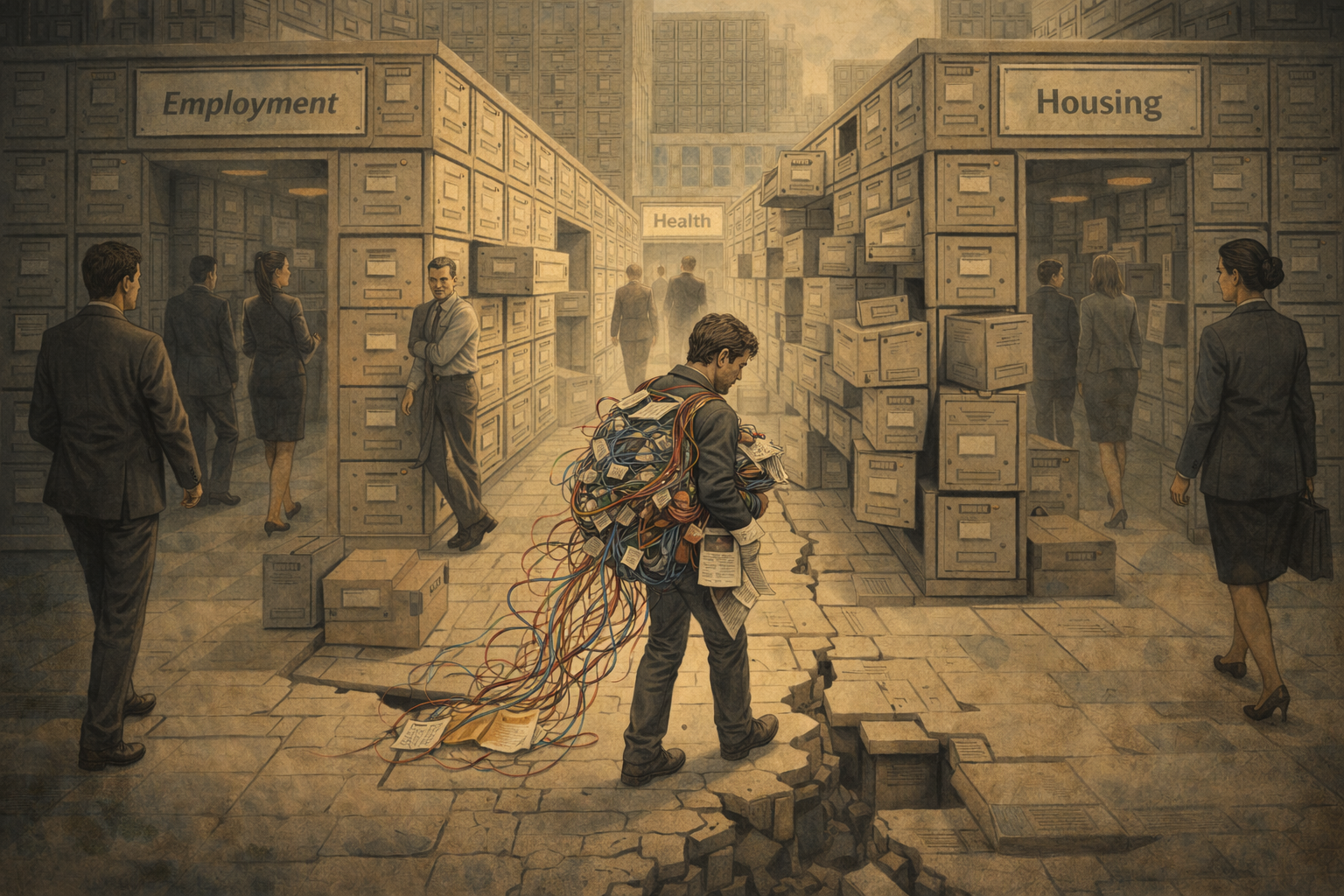
Humanity at a Crossroads
Many of today’s social pressures — institutional fatigue, workforce burnout, declining trust, fractured communities — are not isolated problems.
They are symptoms of systems struggling to hold the realities of modern human life.
Our institutions were built for an earlier era of predictability.
But the world has changed.
Human behaviour, identity, culture, and work patterns have evolved faster than the systems meant to support them.
We are not simply dealing with inefficiencies.
We are confronting the limits of outdated models.
Humanity is approaching a crossroads:
Adapt our frameworks to match human complexity — or continue forcing people into systems that cannot truly support them.
The Future May Belong to the Overlooked
Every person who has been described as too complex, too emotional, too unconventional, too reactive, too unpredictable — these labels often reveal less about the person and more about the system observing them.
The framework didn’t know how to interpret what it was seeing.
But when societies begin designing structures capable of holding those individuals, something remarkable happens.
The very people once viewed as problems become sources of insight, innovation, and change.
Because historically, it is rarely the easy cases that reshape civilisation.
It is the individuals who reveal where the old systems stopped working.
The Systems That Will Endure
Public systems are not inherently malicious.
Many were built with good intentions.
But they were designed for a narrower version of humanity than the one we actually inhabit.
The future will not be shaped by those who fit the existing boxes.
It will be shaped by those who reveal where the boxes must be redesigned.
The institutions that endure will be the ones willing to evolve.
And the ones that cling to convenience will eventually be replaced by systems capable of supporting the full human spectrum.