The Pressure Between the Establishment and the Punters
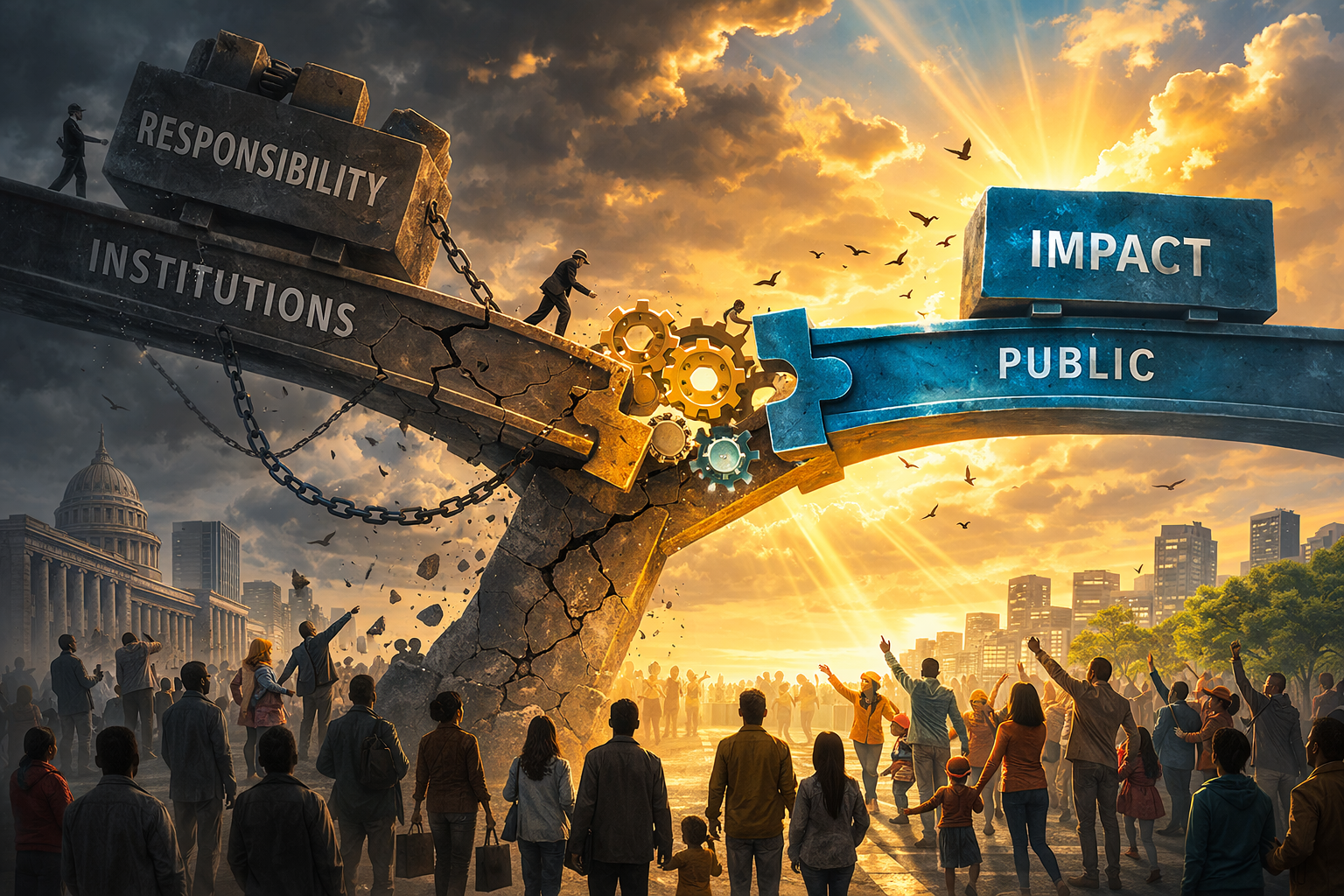
Why the future depends on a model that understands both.
Two Worlds, One System
Across every society there exists a tension between two groups.
The establishment — the institutions, organisations, governments, and decision-makers responsible for maintaining structure and order.
And the punters — the everyday participants who live inside that structure and experience its consequences.
These two worlds are often portrayed as adversaries. One is framed as powerful and insulated, the other as frustrated and voiceless. But the truth is more complex than that.
The establishment carries a great deal of responsibility.
The punters carry a great deal of pain.
And both carry pressure.
The mistake we often make is assuming that only one side is under strain. In reality, both are navigating different forms of the same underlying force.
The Establishment’s Pressure
From the outside, the establishment often appears comfortable. It holds authority, resources, and the ability to shape decisions that affect millions.
But with that position comes a constant burden.
The establishment must maintain stability while responding to endless variables — economic shifts, political cycles, social expectations, technological disruption, and public scrutiny. Every decision risks backlash. Every reform risks unintended consequences.
Institutions are expected to move carefully, because the systems they manage are vast and delicate. A poorly designed change can ripple through entire sectors of society.
This pressure encourages caution.
Caution encourages rigidity.
And rigidity eventually creates distance from the people the system is meant to serve.
Over time, institutions can become less responsive, not because they lack concern, but because they are trapped inside structures designed to minimise risk rather than maximise understanding.
The Punters’ Pressure
On the other side of the equation are the punters — the people who live inside the systems the establishment manages.
Their experience of pressure is different, but no less real.
They feel the weight of economic uncertainty, rising costs, shifting cultural expectations, and the constant need to adapt to structures they rarely have a hand in designing.
When systems fail, it is the punters who feel the consequences first. Delays, inefficiencies, bureaucratic complexity, and gaps in support land squarely in their lives.
This creates frustration.
Frustration breeds distrust.
And distrust deepens the divide between institutions and the public.
The punters begin to believe the establishment doesn’t care.
The establishment begins to believe the punters don’t understand.
And the cycle continues.
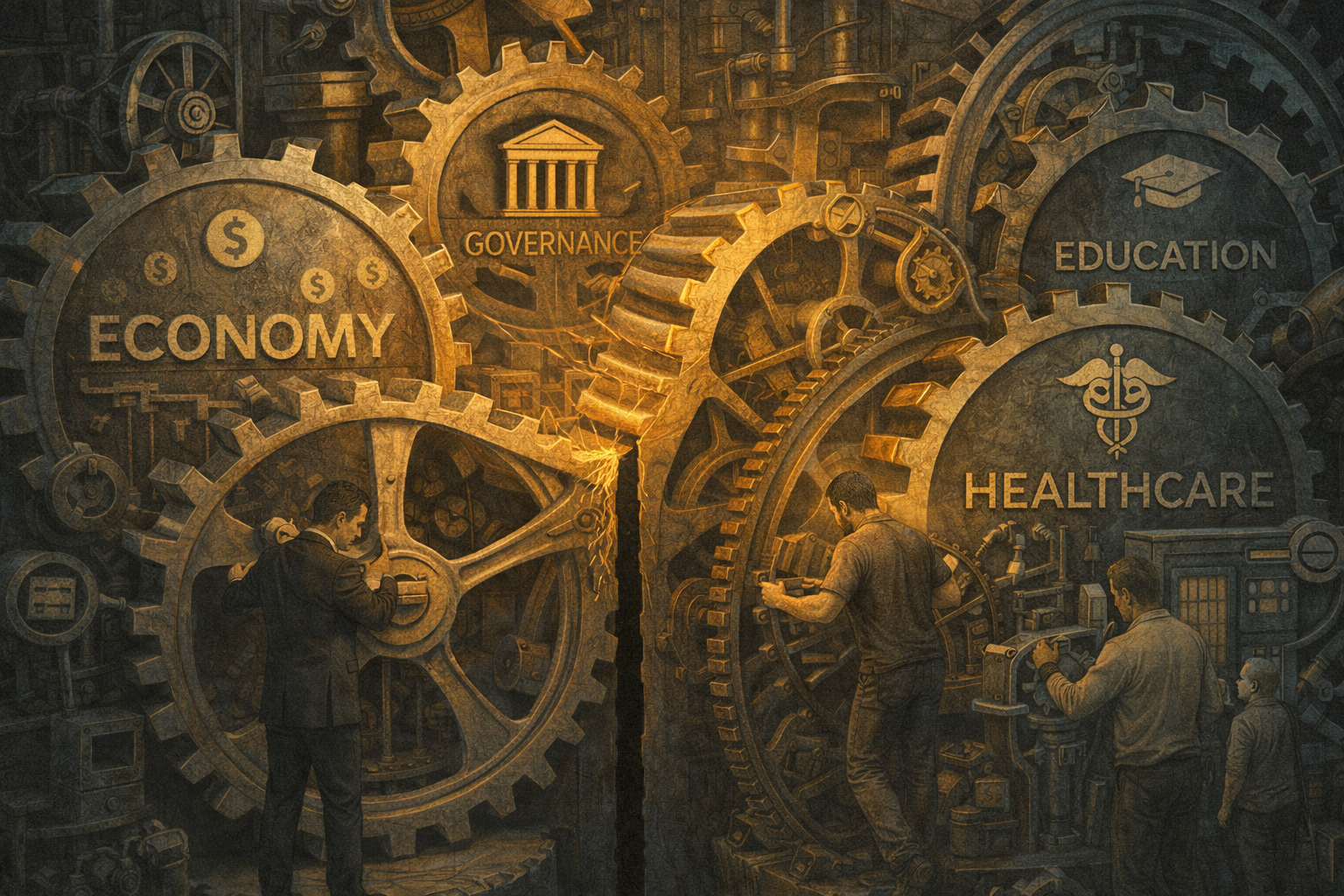
A System of Misunderstood Pressure
The deeper truth is that neither group is the enemy of the other.a different approach.
Both are responding to pressure.
They simply experience it in different forms.
The establishment feels the pressure of responsibility — maintaining systems that must function at scale.
The punters feel the pressure of impact — living with the outcomes those systems produce.
The tragedy is that the model connecting them rarely acknowledges either side’s reality.
Instead, it operates on assumptions, outdated frameworks, and inherited structures that no longer reflect the complexity of modern society.
The result is predictable: misunderstanding, resentment, and stagnation.
A Different Model
The future requires a different approach.
Not one that favours the establishment over the punters, or the punters over the establishment — but one that understands the pressures carried by both and redistributes them in a way that creates balance.
Such a model doesn’t erase pressure. Pressure is part of life, and part of progress.
What it does is reorganise how pressure moves through the system.
It introduces a revised order.
A fresh formation.
A new format.
One that aligns the interests of institutions and the public around shared principles rather than opposing positions.
When pressure is understood and distributed correctly, it stops acting as a force of division and begins acting as a force of progress.
Learning from Both Worlds
Understanding this dynamic requires more than theory. It requires experience.
Over the years, I have lived and operated on both sides of the divide — within the establishment and among the punters.
I’ve done so deliberately, as part of a broader process of research and observation.
Seeing the system from only one perspective makes it easy to assign blame. Seeing it from both reveals something different: a structure that is struggling to reconcile competing pressures without the frameworks needed to do so.
Neither side fully understands the other’s constraints.
Neither side fully understands the other’s motivations.
But both are participating in the same system, and both ultimately depend on its stability.
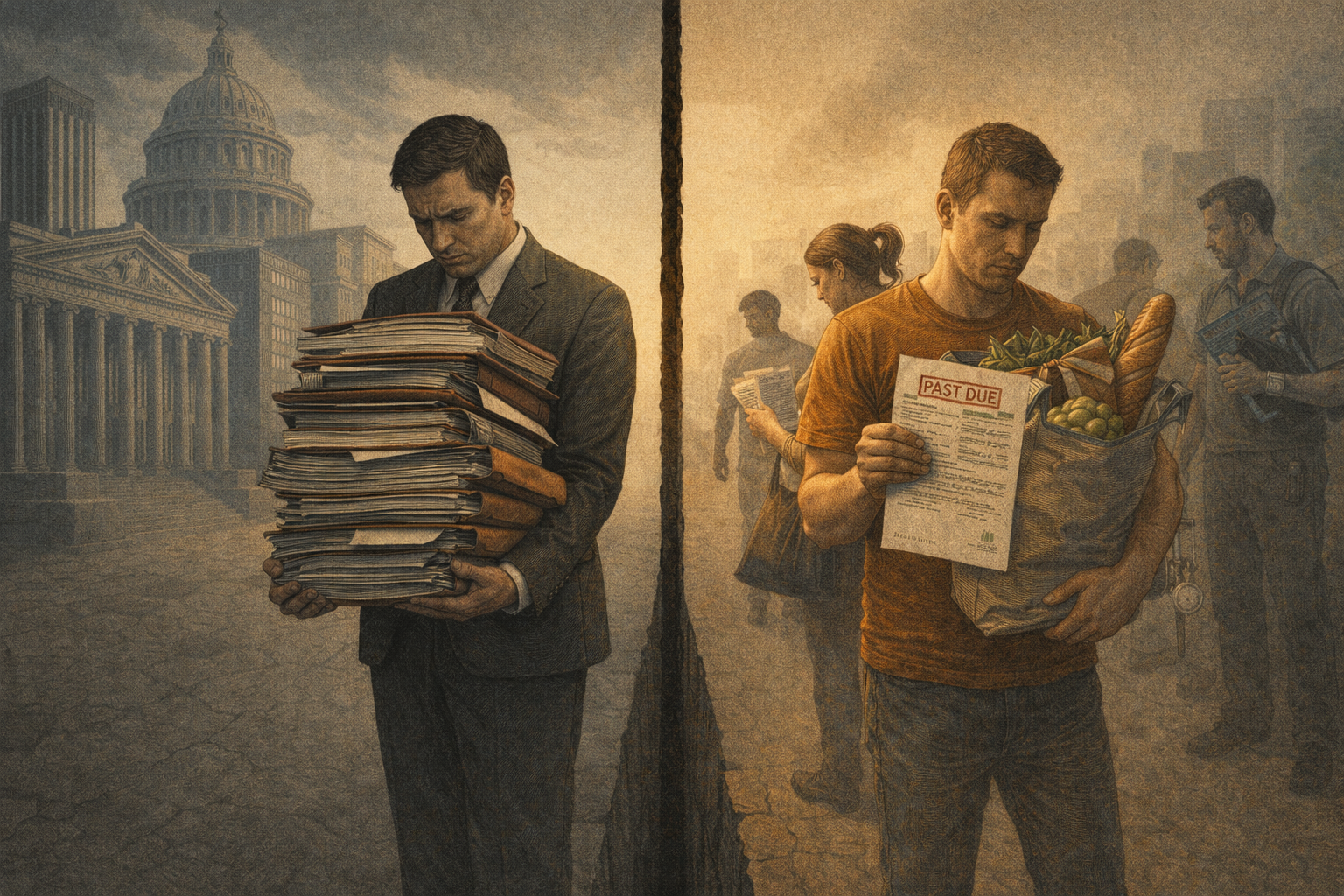
Serving Both
Despite having operated within both environments, I don’t identify as belonging exclusively to either one.
Instead, my role — and the role of the work we’re building — is to serve both.
Because a sustainable future cannot be built by choosing one side over the other.
It must be built by creating structures that allow both to operate in alignment with the principles that underpin society itself: responsibility, trust, fairness, and coherence.
When those principles guide the architecture of a system, pressure becomes manageable rather than destructive.
Institutions become more responsive.
Communities become more engaged.
And the gap between decision-makers and participants begins to close.
The Work Ahead
This is the focus of the work being developed through Global Stage Management™.
GSM is designed to produce cultural and structural frameworks that help realign the relationship between the establishment and the punters.
Not by dismantling institutions.
Not by inflaming resentment.
But by introducing models that allow both sides to understand and navigate the pressures they carry.
The goal is not to replace the system overnight.
It is to evolve it.
To introduce structures that translate complexity into clarity, distribute responsibility more intelligently, and create environments where institutions and the public can work together rather than against one another.
A Moment of Transition
We are entering a moment where many of the systems society relies upon are showing signs of strain.
That strain isn’t a sign that the idea of institutions has failed, nor that the public has become impossible to serve.
It’s a signal that the frameworks connecting the two need to evolve.
The pressure we see today — across politics, economics, culture, and social infrastructure — is not the end of the story.
It’s the beginning of a transition.
And transitions require new thinking.
What Comes Next
The work to address this dynamic has been developing quietly for some time.
It’s built around a simple but powerful idea: that when the pressures of the establishment and the punters are understood and organised through principle-based models, both sides benefit.
Institutions gain clarity and resilience.
Communities gain stability and trust.
And the system as a whole becomes capable of supporting the complexity of modern life.
We are now approaching the point where that work can begin to be shared.
Not as theory.
But as architecture.