The Patience to Keep Looking
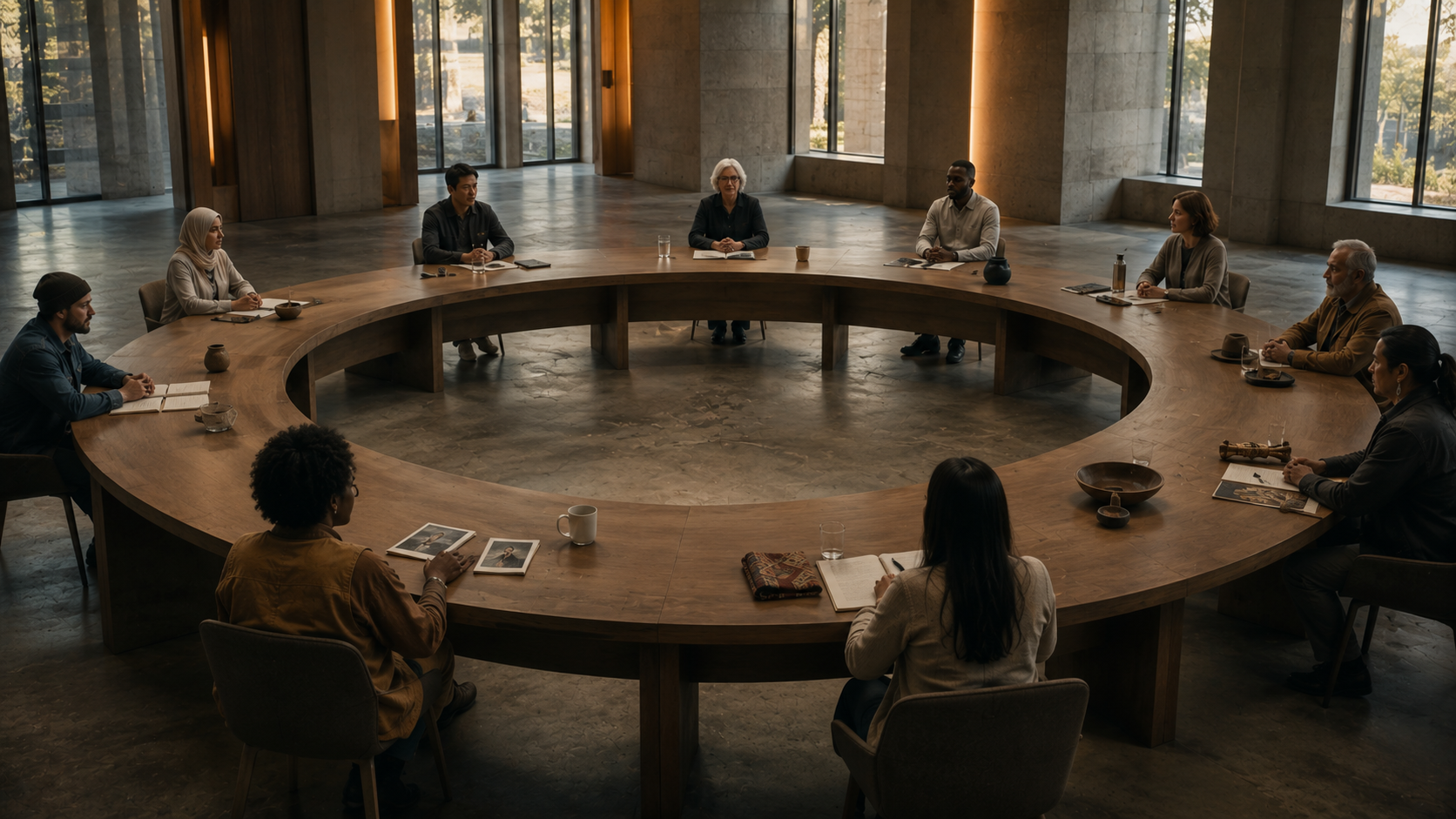
Why societies lose momentum when they stop trying to understand how people fit together.
Patience Is Not Passive
Patience is often treated as a soft virtue, something polite people practise while waiting for circumstances to improve. But at a societal level, patience is not passive. It is the capacity to remain present with complexity long enough for understanding to become possible.
When people lose patience with one another, they rarely move straight into wisdom. More often, they move into judgement. They begin deciding too quickly what someone represents, where someone belongs, whether someone is useful, and whether someone deserves continued attention. The absence of patience does not create clarity. It creates premature certainty.
This matters because human beings are not immediately understandable. Neither are communities, institutions, families, cultures, or nations. Every person carries a history, a pressure load, a language, a rhythm, a set of needs, and a set of contributions that may not be visible at first contact. Patience gives people enough time to become legible to one another.
The First Door Is Observation
Before a society can solve its problems, it has to keep looking. Not glancing. Not profiling. Not reacting. Looking.
The first door is the willingness to observe one another without immediately converting what we see into a final judgement. That does not mean abandoning discernment or pretending all behaviour is harmless. It means recognising that understanding usually requires more than the first impression, the loudest reaction, or the most convenient category.
Many pathways only become visible after this first door is entered. A person’s role may not be obvious at the beginning. A community’s pain may not be clear from the outside. A conflict may not reveal its true structure until people remain present long enough to see what sits beneath it. Without patience, those deeper doors remain hidden.
This is why patience is not a decorative moral preference. It is an entry condition. Without it, societies keep mistaking the surface for the whole picture.
When Judgement Replaces Understanding
The alternative to patience is not efficiency. It is sorting.
Once people stop patiently looking at one another, they begin dividing one another into categories of worth. Worthy or unworthy. Valid or invalid. Welcome or unwelcome. Involved or excluded. Useful or disposable. Each judgement may feel justified in isolation, but together they create a society organised around rejection rather than understanding.
This shift is subtle at first. It begins with impatience toward difference, irritation toward complexity, and discomfort with what does not immediately make sense. Over time, that impatience becomes a cultural reflex. People stop asking where others fit within the wider picture and start deciding whether they should be allowed in the picture at all.
A civilisation that operates this way slowly loses its ability to integrate. It may still speak the language of progress, but its social energy becomes fragmented by constant evaluation, suspicion, and exclusion.
The Platform Problem
When patience collapses, people start standing on separate platforms pointing at one another.
Each platform has its own language, priorities, wounds, assumptions, loyalties, and claims to correctness. From each platform, the other platforms look wrong. The result is not merely disagreement. It is the hardening of position into identity.
Once this happens, conversation becomes performance. Listening becomes weakness. Adjustment becomes betrayal. People no longer engage to understand the whole; they engage to defend the platform they are standing on. The more this pattern spreads, the harder it becomes to build anything that requires shared motion.
This is a losing game even for the strongest participant. No person, group, institution, or movement can carry a civilisation alone from a platform of permanent opposition. Long-term development requires more than being right from one angle. It requires enough patience to see where the angles connect.
Momentum Is Lost Through Division
Division does not only damage relationships. It depletes momentum.
When people stop looking for how they fit together, time and energy begin leaking from the system. Resources are spent defending positions instead of building pathways. Talent is wasted in conflict. Shared effort is broken into competing fragments. Possibility shrinks because people are too busy proving their own platform correct to notice what could be built between them.
This undermines exponential growth. It prevents cumulative effect. It weakens the power of shared resources, shared effort, shared intelligence, and shared responsibility. A society may still appear active, but much of its movement becomes circular rather than developmental.
The cost is not only emotional. It is structural. Without patience, coordination breaks down. Without coordination, momentum thins. Without momentum, long-horizon development becomes harder to sustain.
Fitting Together Does Not Mean Becoming the Same
One of the mistakes people make when they hear the phrase “how we all fit together” is assuming it requires agreement, sameness, or ideological uniformity. It does not.
Fitting together does not mean every person shares the same viewpoint, function, belief, rhythm, or role. It means the larger system has enough maturity to understand relationship, position, and contribution without demanding that everything become identical.
A society can contain disagreement without collapsing into hostility. It can contain difference without turning difference into threat. It can contain multiple functions without requiring one function to dominate every other. But this requires patience, because relationship is not always obvious at first glance.
The question is not whether everyone becomes the same shape. The question is whether we can keep looking long enough to understand the wider arrangement.

Patience Creates Capacity
Patience creates capacity because it stops the system from closing too early.
When people remain patient, they preserve room for new information. They allow meaning to emerge. They reduce the likelihood of misreading one another. They keep open the possibility that someone who appears difficult, unfamiliar, inconvenient, or contradictory may still have a place within the larger design.
This does not mean every behaviour is accepted or every claim is validated. It means the process of understanding is not abandoned prematurely. A patient society can still hold standards, boundaries, and direction. The difference is that it does not confuse immediate discomfort with final truth.
Capacity grows when people can stay in the looking process. Not forever without movement, but long enough for more accurate movement to become possible.
The Long-Horizon Requirement
Long-horizon development depends on patience because anything built across time must survive complexity.
A short-term culture can afford to react quickly, divide quickly, dismiss quickly, and move on quickly. A civilisation cannot. Anything intended to endure must learn how to hold competing pressures without instantly collapsing into judgement. It must learn how to remain oriented while the full picture is still forming.
Patience allows societies to stay with questions that do not resolve immediately. Where does this person fit? Where does this group fit? Where does this pressure belong? What is this conflict revealing? What pathway has not yet become visible? These questions require time, but they also create the conditions for more intelligent design.
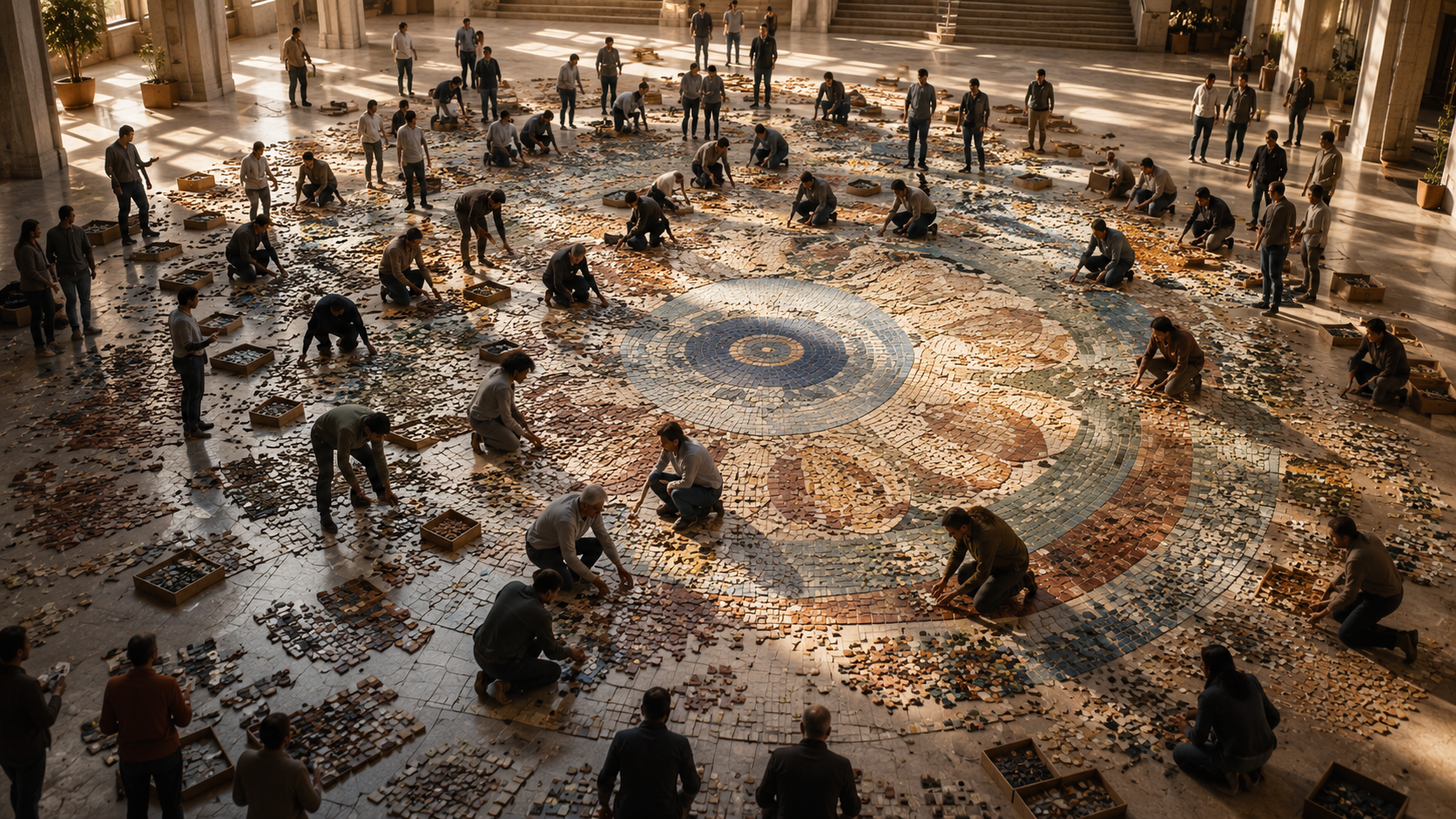
Without patience, the future is built from fragments. With patience, the future can be assembled with greater coherence.
The Work Begins With Looking
The beginning is not a finished plan. It is the decision to keep looking at one another long enough to understand how the pieces relate.
That is the entry point. Before the next door, gate, or pathway becomes visible, a society must first resist the urge to reduce one another too quickly. It must hold itself back from turning difference into disqualification and uncertainty into exclusion. It must learn to see patience not as delay, but as the discipline that allows deeper alignment to emerge.
This is where the work begins. Not with everyone standing on separate platforms proving their own correctness, but with enough patience to recognise that the wider picture may contain more than any one platform can see.
When that door is entered first, the next doors begin to reveal themselves. Pathways that could not be seen from impatience become visible through continued attention. The objective is not to erase difference, but to develop the capacity to understand relationship. A society capable of doing that becomes far harder to fragment, and far more capable of building across time.