The Collective Catalyst: Transforming Individual Needs into Unified Power

How interdependence, communication frameworks, and systemic alignment unlock collective human capacity.
The Myth of the Self-Sufficient Individual
Modern culture often celebrates the idea of the lone achiever — the individual who rises through talent, determination, or brilliance alone. While compelling as a narrative device, this framing obscures the reality of how meaningful progress actually occurs.
Across civilisations, breakthroughs in science, culture, governance, and development have emerged not from isolated effort but from coordinated contribution. Human advancement has always been a networked phenomenon, shaped by shared knowledge, distributed capability, and aligned intention.
Interdependence as a Structural Condition
Every individual operates within a landscape of uneven strengths and limitations. Skills, energy, insight, and opportunity rarely distribute themselves evenly across populations. This imbalance is not a flaw in human design — it is a structural feature that makes cooperation possible.
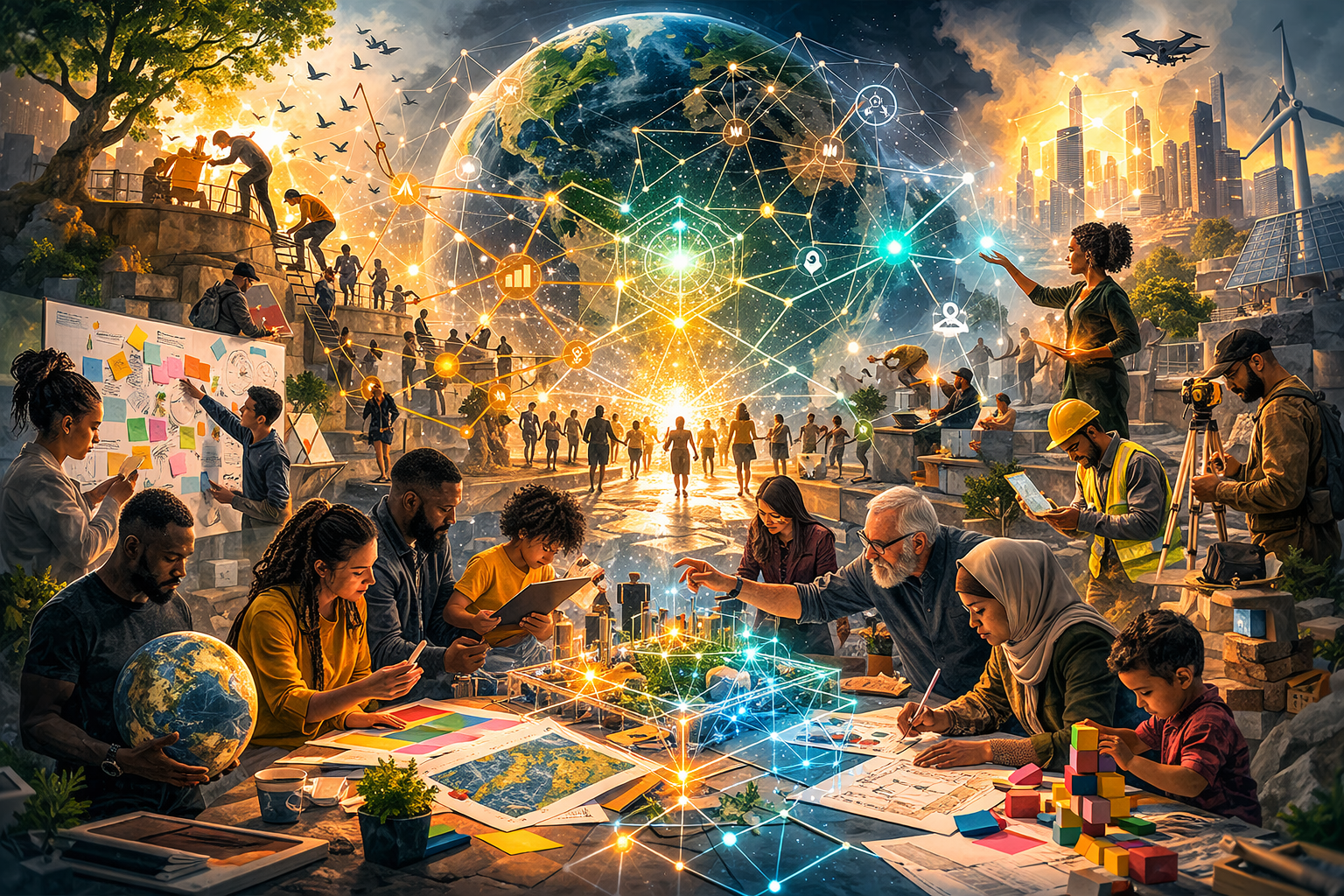
Interdependence allows individuals to exchange capacity, forming systems that achieve outcomes beyond the reach of isolated effort. When properly recognised, this dynamic becomes a catalytic force for innovation and resilience.
Communication Frameworks as Capacity Infrastructure
Collaboration does not occur automatically. It requires mechanisms that enable individuals to recognise needs, express limitations, and align contributions without friction. Communication frameworks act as this infrastructure.
These frameworks are not simply tools for dialogue. They function as systemic stabilisers, transforming misunderstanding into clarity and tension into constructive movement. Without them, collaboration remains aspirational. With them, it becomes operational.
The Hidden Logic of Resource Misalignment
Many collaborative failures stem from a misinterpretation of unmet needs. Individuals may appear unwilling to contribute when, in reality, they lack support in their own domains of responsibility.
When capacity gaps go unacknowledged, systems stagnate. Recognising these gaps reframes perceived resistance as structural imbalance, allowing collaboration to evolve from negotiation into coordinated problem-solving.
Mutual Capability and the Distributed Toolbox
Human systems function most effectively when diverse capabilities converge toward shared objectives. One participant may bring structure, another creativity. One may provide stability, another direction.
These differences are not obstacles but complementary assets. When integrated deliberately, they form a distributed toolbox capable of addressing complex challenges across cultural, economic, and social contexts.
Cultural Narratives That Obscure Collective Power
Societies often reinforce narratives of independence and competition as markers of strength. While these narratives can motivate individual effort, they can also undermine collective potential by discouraging mutual reliance.
Reframing success as a shared construct allows cultures to transition from scarcity-based thinking toward abundance-oriented collaboration, where progress becomes a function of alignment rather than rivalry.

The Consequences of Fragmented Engagement
When communication breaks down and interdependence remains unrecognised, systems fragment. Individuals expend energy defending territory rather than building shared outcomes.
This fragmentation manifests as inefficiency, mistrust, and stalled development. Over time, it reduces societal capacity to respond effectively to emerging challenges, weakening resilience at both local and global scales.
Reframing Responsibility Within Collective Systems
Understanding interdependence shifts the concept of responsibility from isolated accountability to shared stewardship. Individuals become both contributors to and beneficiaries of systemic strength.
This reframing encourages environments where needs can be expressed without stigma and contributions can be offered without imbalance, fostering ecosystems built on mutual reinforcement rather than conditional exchange.
Toward a Systemic Model of Unified Potential
Future-oriented systems will increasingly rely on frameworks that translate individual capability into collective momentum. These models prioritise alignment, clarity, and structural support over symbolic unity or superficial cooperation.
In such environments, collaboration becomes a designed process rather than an incidental outcome, enabling societies to transform latent human potential into sustained developmental power.