When Vision Expands Beyond Its Origin
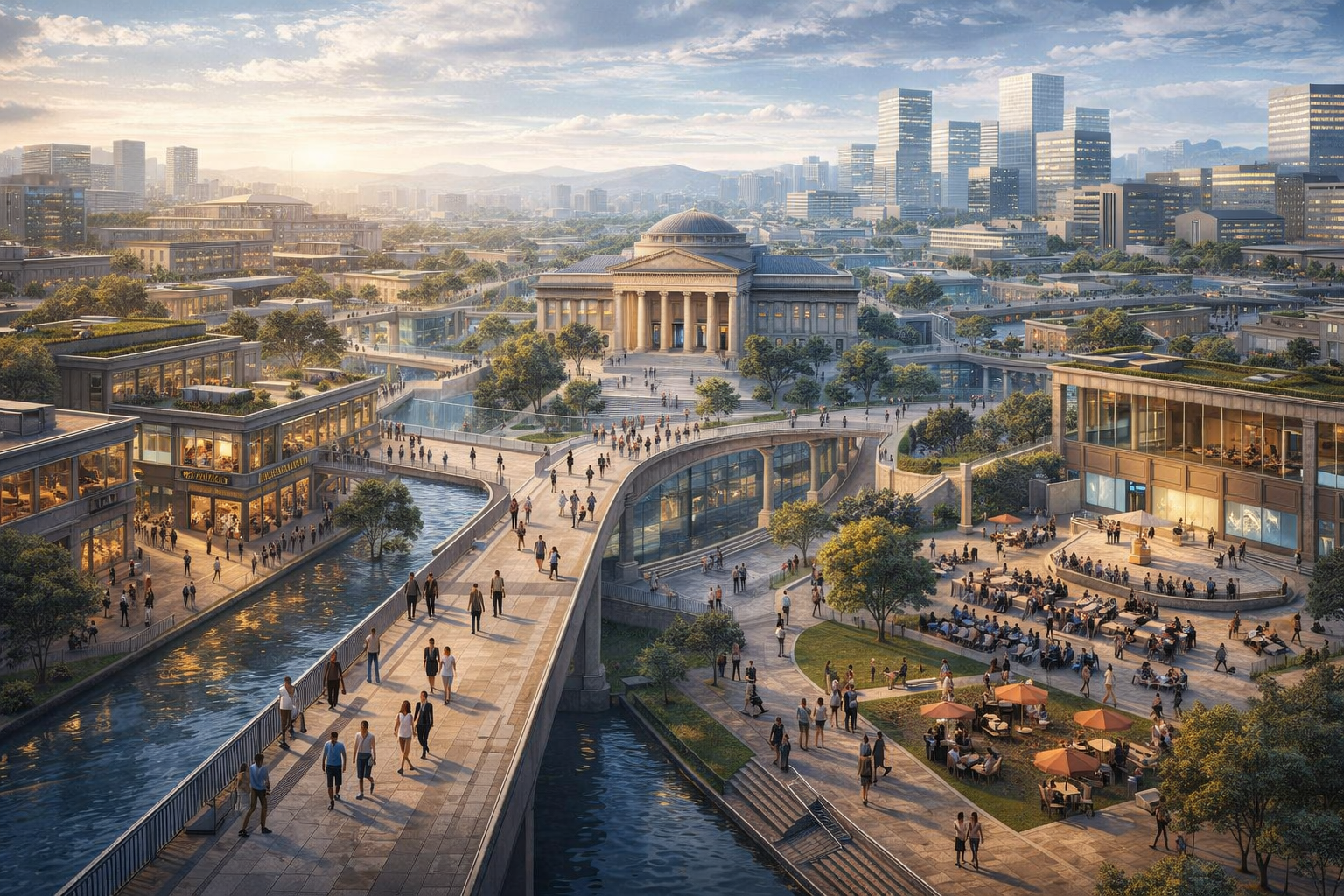
How integrative thinking reshapes systems, institutions, and long-term economic direction.
The Moment Vision Moves Beyond the Individual
Most ideas begin with a person. A frustration, an insight, or a recognition that something in the current order is insufficient. Yet the ideas that ultimately shape societies are those that evolve beyond personal ambition and become structural in nature. They stop functioning as expressions of identity and begin functioning as organising forces that align activity across domains.
This transition marks the difference between initiative and institution. Once a vision begins influencing how industries interact, how culture adapts, and how economic capacity is structured, it ceases to belong to its originator and becomes part of a broader developmental trajectory.
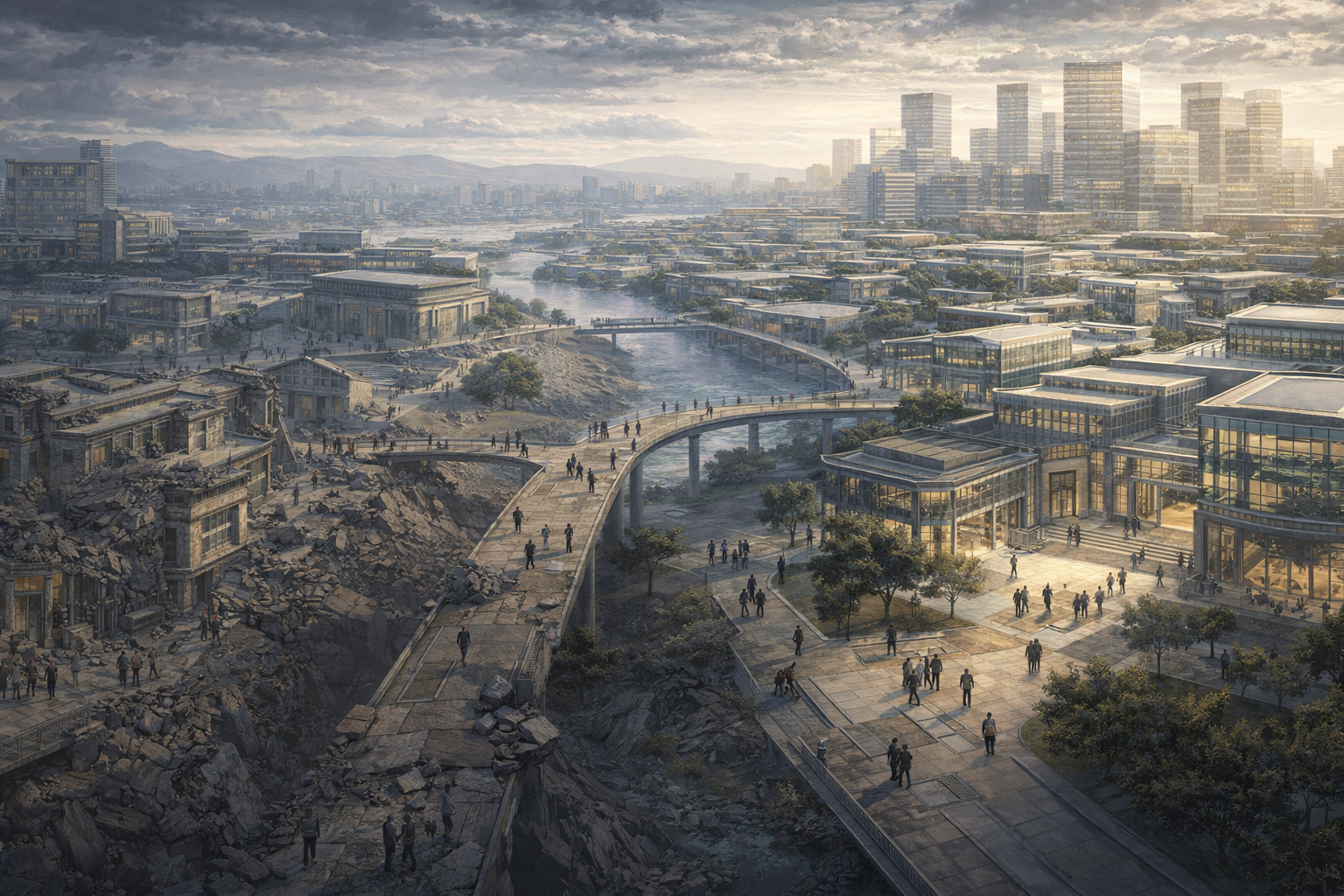
Fragmented Systems and the Limits of Conventional Growth
Modern systems are often organised in ways that separate creativity from strategy, culture from economics, and governance from innovation. This fragmentation creates inefficiencies that are rarely recognised at surface level. Organisations may grow in isolated metrics while remaining structurally weak, unable to integrate progress into durable capacity.
Vision that transcends boundaries challenges this fragmentation. It introduces coherence where compartmentalisation once existed, allowing productive alignment to emerge across sectors that previously operated in parallel rather than in collaboration.
Integration as the New Form of Strategic Advantage
In an environment defined by complexity, integration has become the primary driver of sustained influence. The capacity to coordinate diverse actors, align incentives, and translate abstract principles into operational environments is increasingly more valuable than scale alone.
This shift reflects a deeper transformation in how economic ecosystems evolve. Competitive advantage is no longer determined solely by resources or technology, but by the ability to orchestrate relationships between systems that were historically disconnected.
Cultural Intelligence as an Economic Force
Economic development is often discussed in terms of infrastructure and capital, yet cultural orientation plays an equally decisive role. Societies that cultivate adaptability, disciplined collaboration, and long-horizon thinking create conditions in which opportunity can be continuously regenerated.
Vision that operates across cultural boundaries contributes to this regenerative capacity. By reframing how individuals and institutions perceive contribution, it alters behavioural patterns that ultimately shape economic outcomes.
The Evolution of Organisational Identity
As systems mature, their identity shifts from what they produce to how they influence. Early stages are defined by outputs — projects, initiatives, or visible milestones. Later stages are defined by the environments they enable and the networks they stabilise.
This evolution requires a recalibration of leadership focus. Attention moves from execution speed toward structural clarity, ensuring that growth does not outpace coherence. Vision becomes less about expansion and more about sustaining alignment under increasing complexity.
Innovation Beyond Sector Boundaries
Technological advancement remains a powerful catalyst, yet its impact is limited when confined within sector-specific frameworks. The most transformative innovations arise when knowledge flows freely between disciplines, allowing new models of cooperation to emerge.
Vision that transcends boundaries supports this fluidity. It enables the reconfiguration of institutional assumptions, encouraging experimentation not only in products or services but in the architecture of collaboration itself.

The Role of Long-Horizon Thinking
Short-term incentives frequently distort strategic direction. Systems optimised for immediate results often sacrifice resilience, creating cycles of rapid growth followed by correction. Long-horizon thinking counterbalances this tendency by embedding continuity into decision-making processes.
Vision operating at this temporal scale does not resist change. Instead, it anticipates adaptation as an inherent condition of progress. By aligning present actions with future capacity, it transforms uncertainty into a navigable dimension of development.
From Conceptual Vision to Structural Influence
Ultimately, vision becomes transformative when it shapes the frameworks through which activity occurs rather than the activity itself. It influences governance norms, investment logic, cultural narratives, and institutional design simultaneously.
At this level, progress is no longer dependent on momentum alone. It is sustained through coherence — a quality that allows systems to expand without losing integrity. Vision that achieves this state contributes not only to economic growth but to the broader evolution of how societies organise opportunity.