How Economic Capacity Is Built — Not Announced

Economic transformation is the outcome of system design, not intention.
The Misconception of Economic Breakthrough Moments
Public narratives around economic development often focus on decisive moments — major investments, flagship projects, or policy shifts presented as catalysts for transformation. While such milestones can be significant, they rarely function as the true drivers of long-term capacity.
Economic ecosystems evolve through cumulative structural alignment. Innovation, infrastructure, governance, and cultural orientation interact over extended periods, gradually shaping the conditions under which productivity and prosperity emerge.
Transformation is typically recognised after it has already been constructed.
Productivity as a Systemic Outcome
National and regional economic performance reflects more than industrial activity or capital flows. It is shaped by the interaction between workforce capability, institutional intelligence, and the coherence of market structures.
Where these elements operate in alignment, productivity increases organically. Where they are fragmented, growth becomes inconsistent regardless of resource availability.
This systemic perspective reframes economic development as a design challenge rather than a financial event.
The Architecture of Opportunity
Economic opportunity does not arise evenly across societies. It emerges in environments where individuals, organisations, and institutions can participate within shared frameworks of trust and coordination.
Such frameworks reduce friction in collaboration, enabling innovation to translate into measurable output. Over time, this creates self-reinforcing cycles of capacity expansion.
Regions that cultivate these conditions tend to outperform those that prioritise isolated initiatives over integrated design.
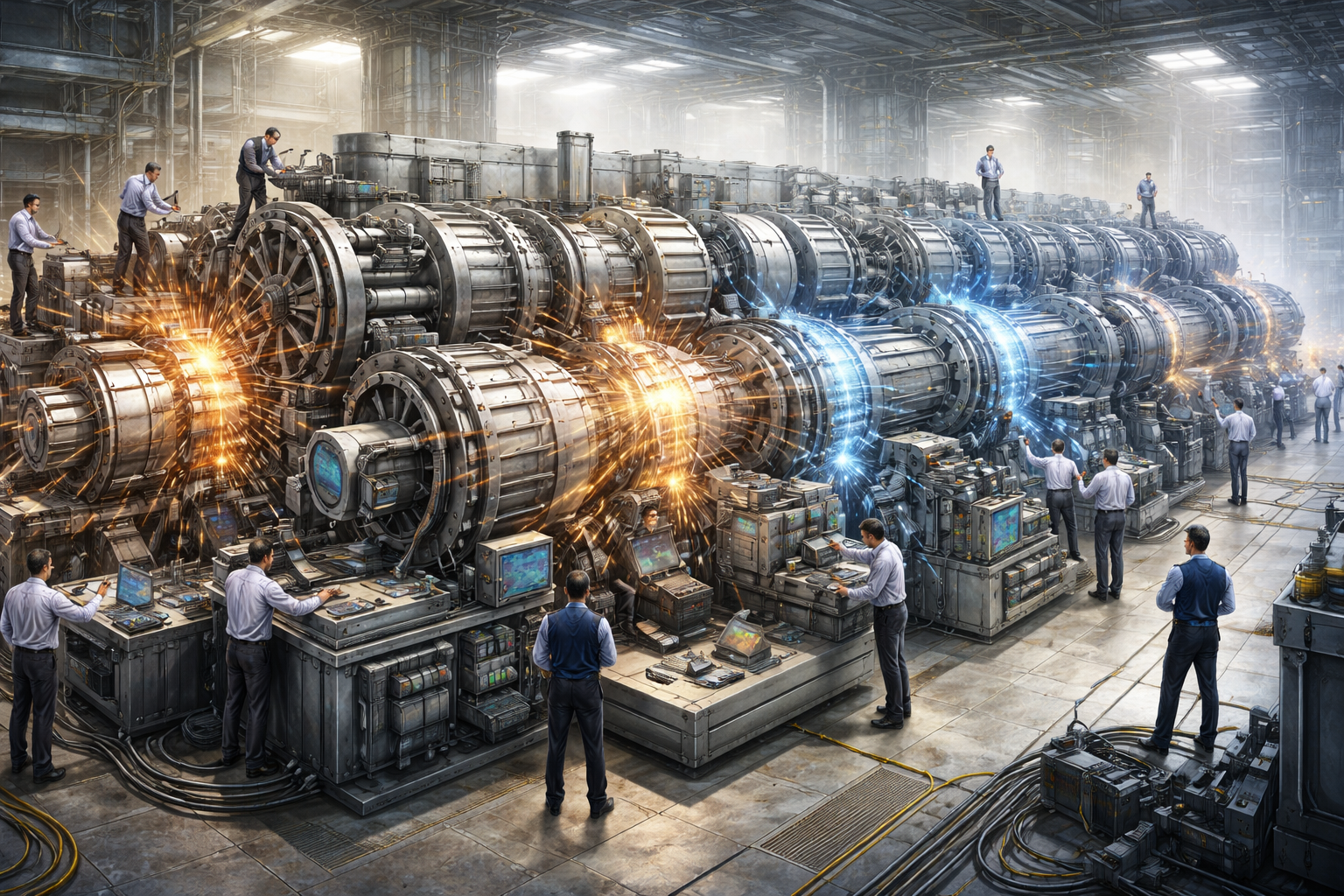
Innovation Beyond Technology
Technological advancement often dominates discussions of economic progress. Yet innovation extends beyond tools and platforms. It encompasses new governance models, cultural narratives around work and contribution, and alternative approaches to collaboration.
By broadening the definition of innovation, systems can generate resilience that persists through technological shifts. This resilience supports sustained economic evolution rather than episodic growth.
Investment as a Signal of Confidence
Capital investment reflects perceptions of stability and future potential. Investors are drawn to environments where long-horizon planning is evident and governance mechanisms demonstrate consistency.
When such signals are absent, even substantial financial incentives may fail to attract sustained engagement. Economic ecosystems therefore rely on credibility as much as on capital.
Confidence accumulates gradually through demonstrated coherence.
Infrastructure as an Expression of Intent
Physical and institutional infrastructure communicates a society’s developmental priorities. Transport networks, educational systems, and regulatory frameworks collectively signal how growth will be supported and distributed.
Effective infrastructure integrates economic ambition with social functionality. This balance reduces the likelihood of growth generating unintended inequality or systemic strain.
Infrastructure thus becomes both a practical asset and a narrative of strategic direction.

Global Interdependence and Regional Identity
In an interconnected world, regional economies operate within broader global dynamics. Trade relationships, cultural exchange, and knowledge networks shape local capacity in ways that transcend geographic boundaries.
At the same time, distinctive regional identity can function as a source of competitive advantage. By aligning local strengths with global demand, economic ecosystems can achieve both resilience and relevance.
Economic Transformation as Institutional Maturity
Long-term economic impact is most often achieved by institutions capable of adapting to complexity while maintaining principled continuity. Such maturity allows systems to navigate uncertainty without compromising strategic coherence.
Rather than pursuing rapid visibility, mature institutions prioritise stability and incremental capability-building. Over time, this approach enables them to influence economic trajectories beyond their initial scope.
The Quiet Construction of Future Capacity
Economic futures are rarely built through singular declarations. They emerge from disciplined alignment between vision, governance, and societal participation.
By focusing on structural integrity rather than immediate outcomes, systems can create environments where prosperity becomes a sustained condition rather than a transient phase.
In this sense, economic transformation is less about announcing ambition and more about constructing the conditions under which ambition becomes viable.