Institutional Development
Transformation Requires Infrastructure
The film could not load. Open the video stream, retry playback, or read the commentary below.
Human potential does not convert through recognition alone.
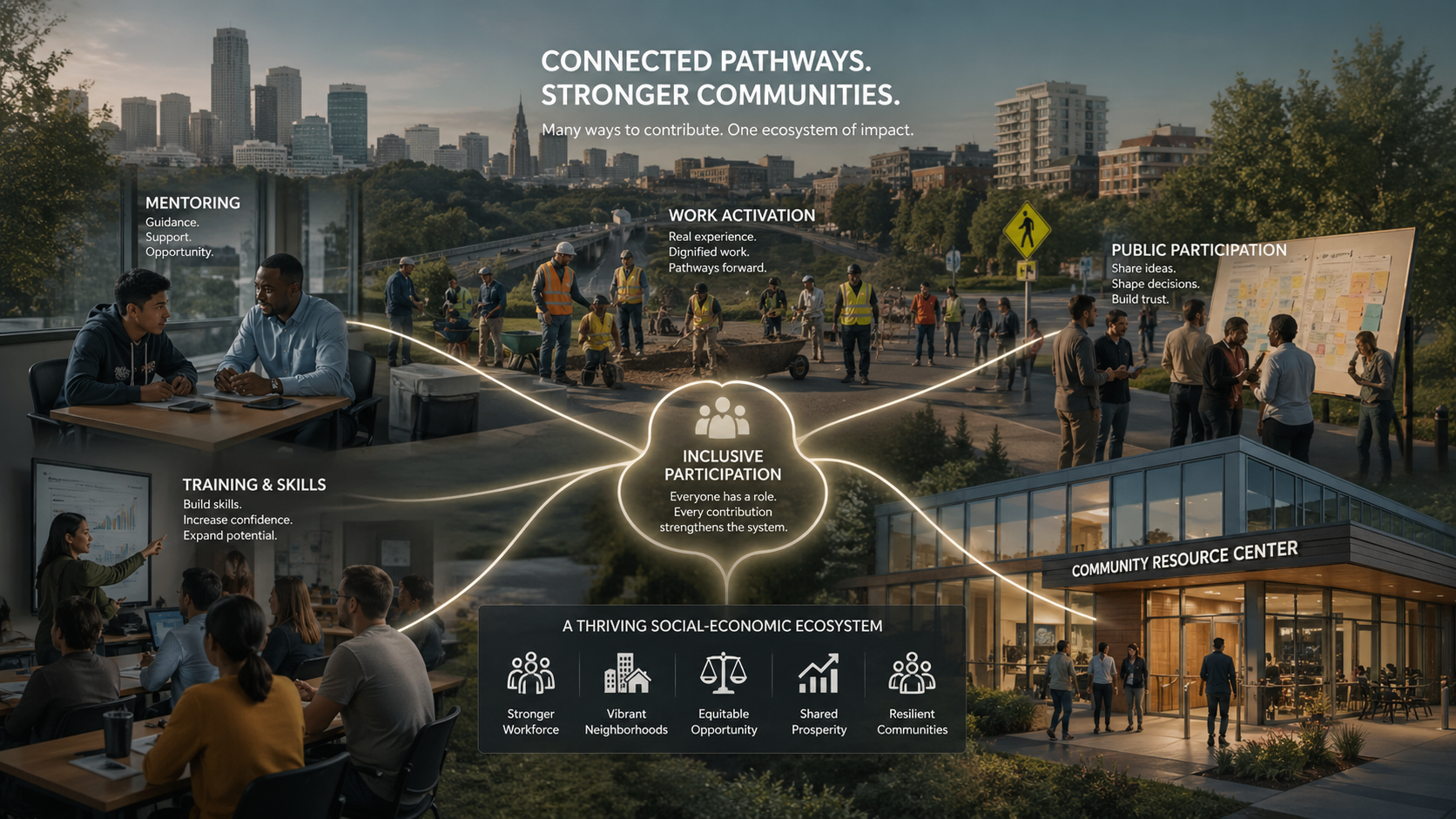
It converts through pathways capable of receiving, developing, and organising contribution.
This entry explores a core proposition within the Asset Uplift logic: that exclusion often persists not because value is absent, but because systems lack the infrastructure needed to convert latent capability into participation.
In this framing, transformation is not improvised support.
It is structured.
The accompanying video explores why social impact becomes credible when supported by implementation architecture rather than goodwill alone.
Explore Why Reform Fails Without Architecture →
Read The Ones We Gave Up On →
Continue Through Field Notes →
Human potential does not convert through recognition alone.
It converts through pathways capable of receiving, developing, and organising contribution.
This entry explores a core proposition within the Asset Uplift logic: that exclusion often persists not because value is absent, but because systems lack the infrastructure needed to convert latent capability into participation.
In this framing, transformation is not improvised support.
It is structured.
The accompanying video explores why social impact becomes credible when supported by implementation architecture rather than goodwill alone.
Explore Why Reform Fails Without Architecture →
Read The Ones We Gave Up On →
Continue Through Field Notes →