Windland™ Rising

Early concepts exploring how identity, symbolism, and infrastructure could shape the emerging Windland vision.
A Vision Taking Shape
Around the world, cities compete for economic relevance, cultural influence, and long-term prosperity. But the places that endure are rarely defined by infrastructure alone. They succeed because they develop identity — a narrative that people recognise, participate in, and believe in.
Windland™ emerged within the broader vision of Global Stage Management™ (GSM™) as an exploration of how regional centres could evolve into globally connected cultural and economic hubs.
From the beginning, the concept recognised that transformation requires more than planning and investment. It also requires symbols, experiences, and shared identity.
Among the early ideas explored were two distinctive concepts:
— A ceremonial Lord Mayor of Windland™
— The Marshmallow Ascender™ sky lift system
While very different in nature, both ideas explored how civic symbolism and imaginative infrastructure could help shape the identity of an emerging destination.
The Lord Mayor of Windland™
Symbolic Identity and Global Representation
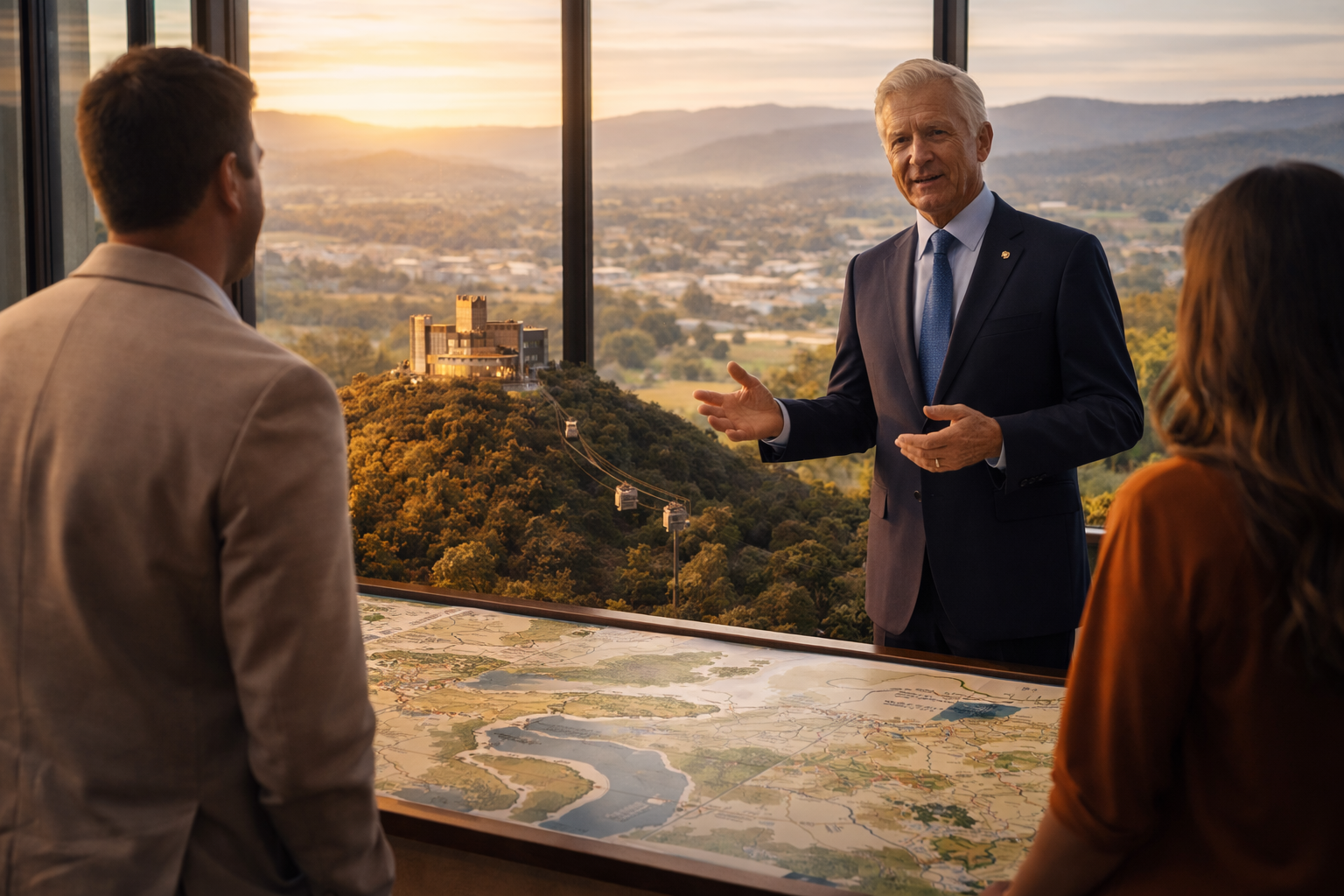
One proposal explored the idea of appointing a ceremonial Lord Mayor of Windland™.
This role was never intended to replace local governance structures. Instead, it was conceived as a unifying symbolic position — a figure who could represent Windland’s collective identity on national and international stages.
In concept, such a role could function as a:
Global Liaison
Participating in trade forums, cultural exchanges, and international dialogue connected to Windland’s development.
Cultural Ambassador
Representing the identity and aspirations of the region in ceremonial and diplomatic contexts.
Strategic Connector
Working alongside local councils, business leaders, and regional partners to help present a cohesive outward identity.
The idea recognised that cities and regions often benefit from symbolic leadership that communicates vision and continuity beyond traditional administrative roles.
The Marshmallow Ascender™
Imagination Meets Destination Design
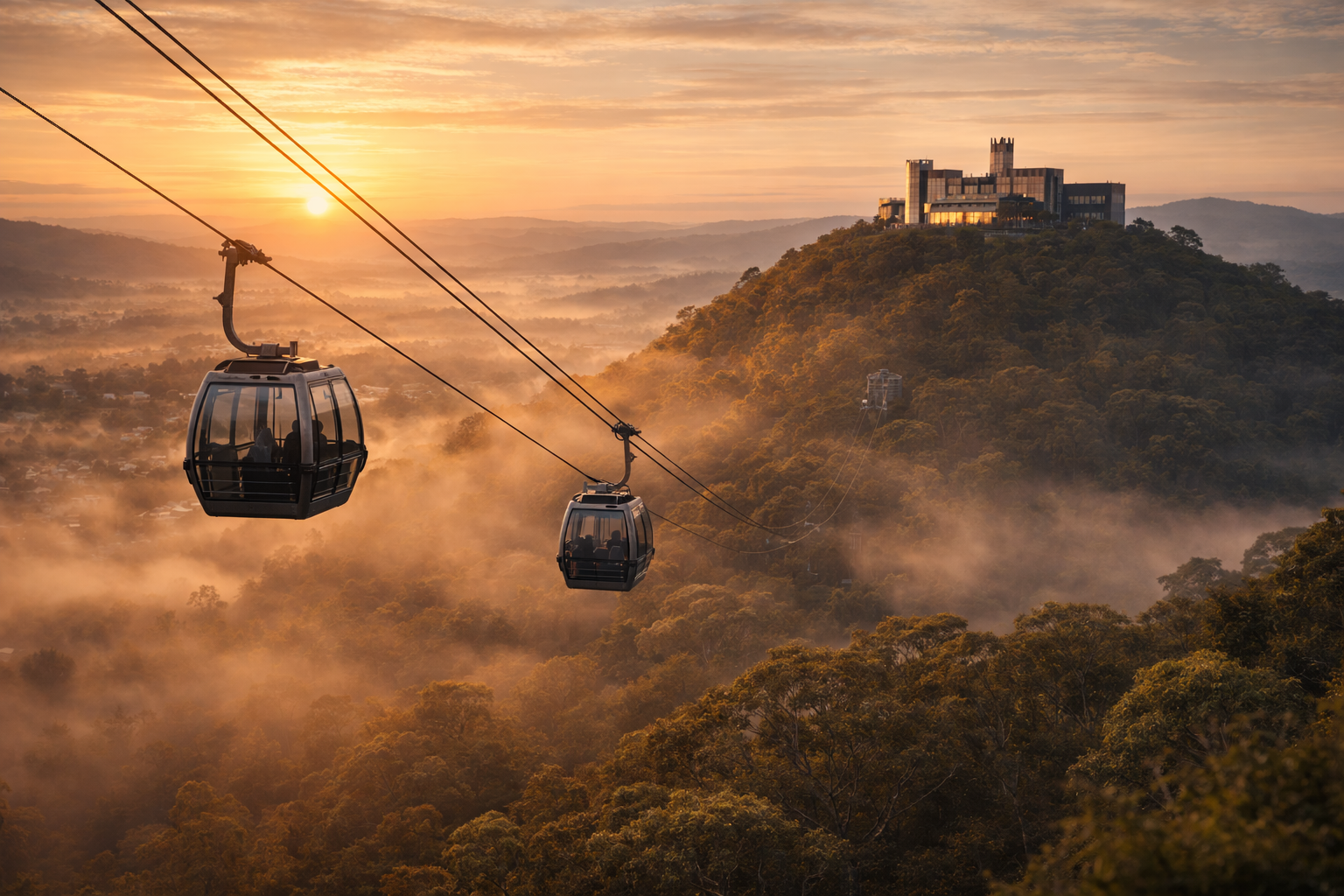
Another early concept focused on creating an iconic visitor experience through the Marshmallow Ascender™ — a proposed sky lift linking the eastern base of Wodonga to the summit of Huon Hill.
The concept imagined a scenic lift transporting visitors to a creative destination known as King Marshmallow’s Reality Castle™, part of the broader storytelling and cultural layer within the GSM ecosystem.
Beyond novelty, the idea explored several practical and symbolic functions:
Scenic Access
Opening panoramic views across the twin cities and toward the Baranduda Ranges.
Destination Connectivity
Providing a memorable gateway to creative venues, hospitality spaces, and media facilities envisioned within the Windland concept.
Iconic Tourism Identity
Establishing a recognisable landmark capable of drawing curiosity and visitor interest.
As a thought experiment in destination design, the Marshmallow Ascender™ represented the blending of imagination, tourism infrastructure, and regional branding.
Why Ideas Like These Matter
At first glance, a ceremonial leadership role and an imaginative sky lift might seem unrelated. Yet both illustrate an important principle in city development:
Places grow stronger when they combine function with meaning.
Infrastructure supports movement and commerce.
Symbols shape identity and belonging.
Together, they help a region develop the narrative that attracts visitors, partners, and long-term investment.
These early Windland concepts explored how civic tradition, storytelling, and experiential infrastructure could work together to build a distinctive identity.
Windland™ and the GSM Vision
Within the wider Global Stage Management™ framework, Windland was conceived as the first practical expression of GSM’s larger philosophy — that economic development, cultural identity, and human creativity can reinforce one another when designed intentionally.
Through initiatives connected to the Seven Dimension Global Business Engine™ (7DGBE™), the Windland concept explored how regions might evolve into interconnected hubs of culture, trade, media, and innovation.
Whether through symbolic leadership, imaginative tourism concepts, or strategic infrastructure, the guiding idea remained consistent:
Cities and regions become powerful not only because of what they build — but because of the story they invite the world to participate in.
Windland™ represents one exploration of that possibility.